
The listing has the right color, the right wheels, and a description that sounds as enthusiastic as you feel. Now comes the useful part: separating the story of the car from the evidence about this particular example. You can enjoy the search and still give yourself a clear process.
Buy the individual car, not its reputation or its parts list. Resolve the expensive unknowns before deciding what the asking price means to you.
Write your use case before opening more listings
Decide whether the car will be daily transport, a weekend hobby, or the beginning of an event project. Record how much downtime you can tolerate and where you can keep it if work takes longer than expected. Include the people who rely on the car in that decision.
Make a must-have list and a preference list. A particular color may be a preference; a workable transport plan is a requirement. This gives you a way to reject a tempting listing without renegotiating your entire plan every time another attractive photo appears. Keep the original brief visible during the search.
Ask for evidence that matches the claims
When a seller says a major job was completed, ask what was done, when, by whom, and what documentation is available. Record exact parts or software versions where relevant. A receipt can support that work was billed; it does not tell you everything about the car's current condition.
For a modified car, ask for a clear change list and whether original parts are included. Separate cosmetic changes from work affecting the vehicle's systems. Do not give an unfamiliar modification a positive value merely because it was expensive. A useful record is one that a qualified inspector can follow, not simply a long folder.
Arrange an independent assessment
The FTC recommends an independent mechanical inspection when buying a used car and distinguishes it from a vehicle-history report. Choose an inspector with relevant experience and tell them how you intend to use the car. Ask about the scope of their assessment and what it cannot establish.
Keep their findings separate from your impressions of the test drive or the seller. If an important question remains unresolved, record the further work needed to answer it before committing. This guide does not replace an inspection, and a vehicle-history report does not prove that every problem or repair appears in the record.
Turn the findings into a first-stage plan
Sort the assessment into matters that need resolution before use, work to plan soon, and optional improvements. Ask the relevant professional for the order of work and complete estimates. Do not convert that list into your own diagnosis based on an online forum.
Compare acquisition and the first required stage together. A lower purchase price with substantial unresolved work may consume more of your available resources than another example. Leave the aspirational modifications out of that first calculation. They should not compete with the work that makes the actual car usable for your intended routine.
Know what would make you leave
Set your decision boundaries while you are calm. Examples include a refused independent inspection, major unexplained inconsistencies in the records, or a first-stage plan that does not fit your resources. These are prompts to pause and investigate; you do not have to turn every concern into an accusation.
After the viewing, take time to compare the car with your brief. Write down the strongest evidence for buying it and the most important unresolved question. If the second list still contains the issue that could change the whole project, the decision is not ready. Another listing will come along; your ability to enjoy ownership matters more than winning this one.
A couple of good questions
Does a long modification list make a car worth more?
Not automatically. Assess documentation, condition, suitability, and the cost of resolving unknowns for the individual vehicle. This guide does not assign a market value.
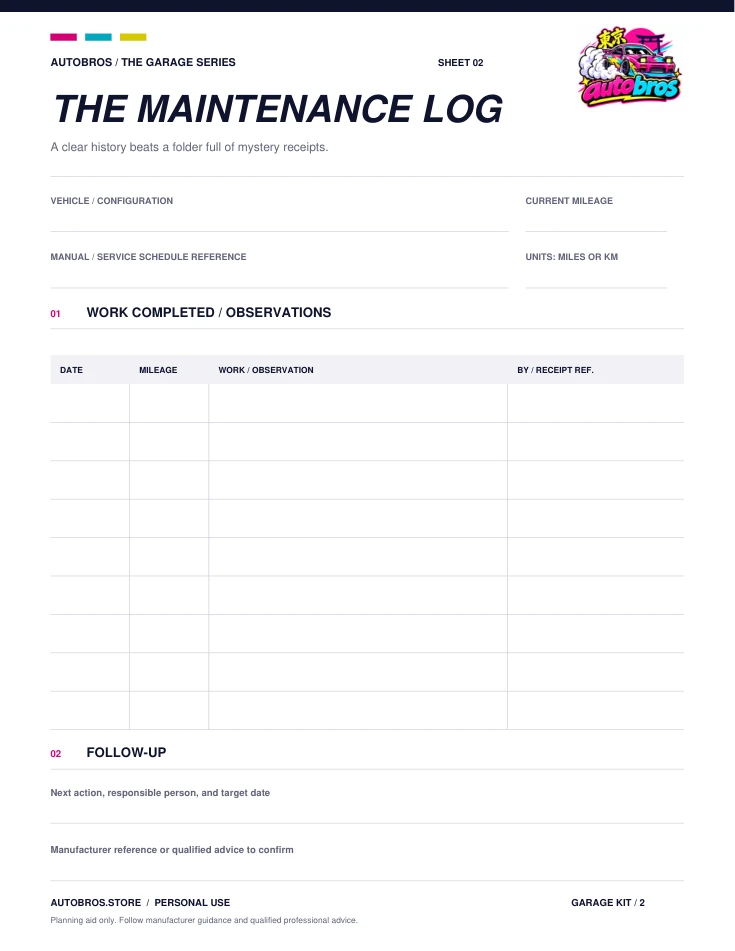
Maintenance log
Dates, mileage, work completed, and what needs attention next.
Fill in the free worksheet Blank PDFReferences & further reading
Sources reviewed October 13, 2026. Product facts are manufacturer or retailer information, not an Autobros test. Confirm current instructions before acting.
FTC — buying a used car from a dealer and independent inspections