Know the car you have before designing the car you want.
Make condition visible
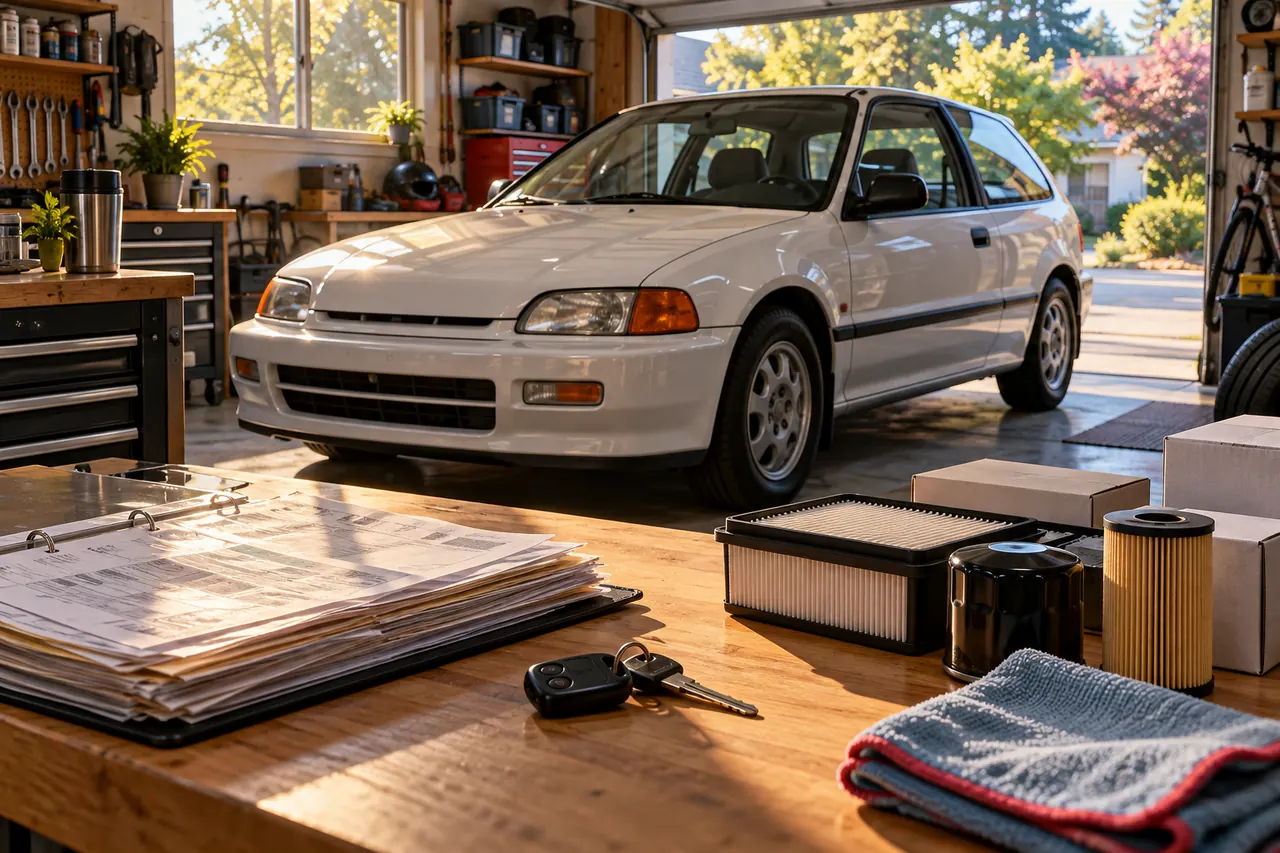
Treat “stage zero” as an organizing idea: understand the car you have before changing it. Gather records, outstanding concerns, and previous modifications. This is not a universal maintenance schedule. Use the manufacturer’s guidance and a qualified technician to determine what your specific vehicle needs.
Create an honest history
Write down what is known, what is uncertain, and what a previous owner merely claimed. Keep receipts separate from estimates and hearsay. Record exact part numbers when available. Unknown history is not proof of a fault, but it is a reason to ask questions rather than assume.
Prioritize unresolved concerns
List warning lights, unusual noises, leaks, and other observations without trying to diagnose them from a short video. Arrange appropriate assessment. Do not use an optional purchase as a reason to delay a safety concern. A build budget should make necessary work visible before styling and performance choices compete for the same money.
Keep upgrades in another column
Separating restoration or maintenance from optional changes helps you see the true cost of both. A replacement needed to address a problem is a different decision from a modification made for appearance. Ask your technician about the appropriate solution instead of assuming a more aggressive part is automatically an improvement.
Document the baseline
Take clear photographs, save the inspection report, and record the date and mileage. After work is completed, note what was done and by whom. The result is a usable story for future decisions, not just a collection of invoices. Your future self, installer, or next owner will have fewer mysteries to untangle.
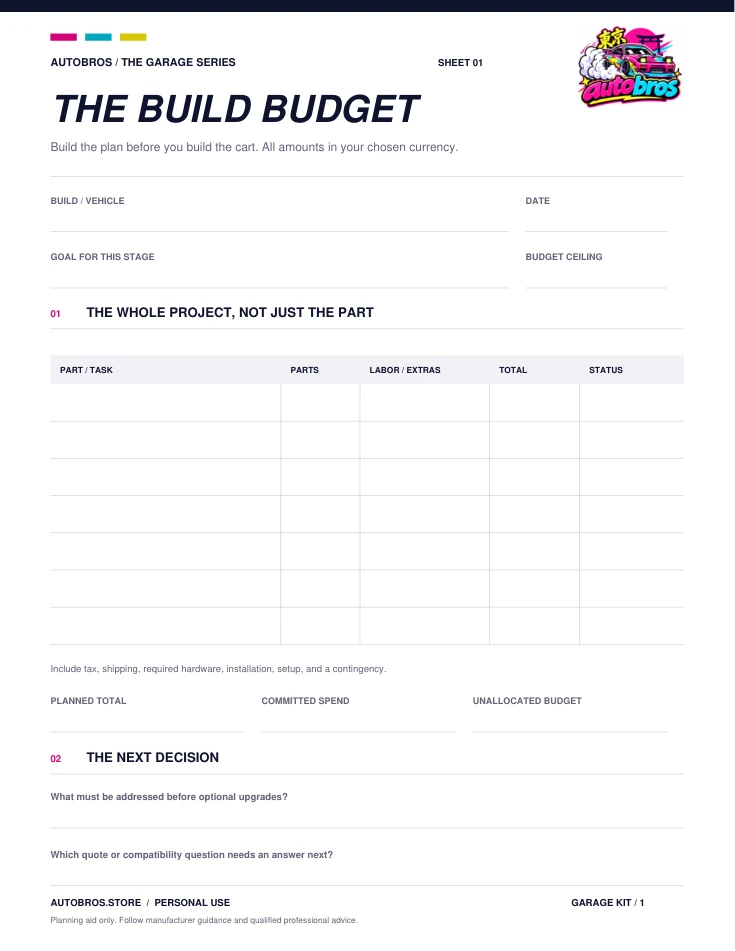
The build budget
Parts, labor, quotes, actual spend, and a little breathing room.
Fill in the free worksheet Blank PDF