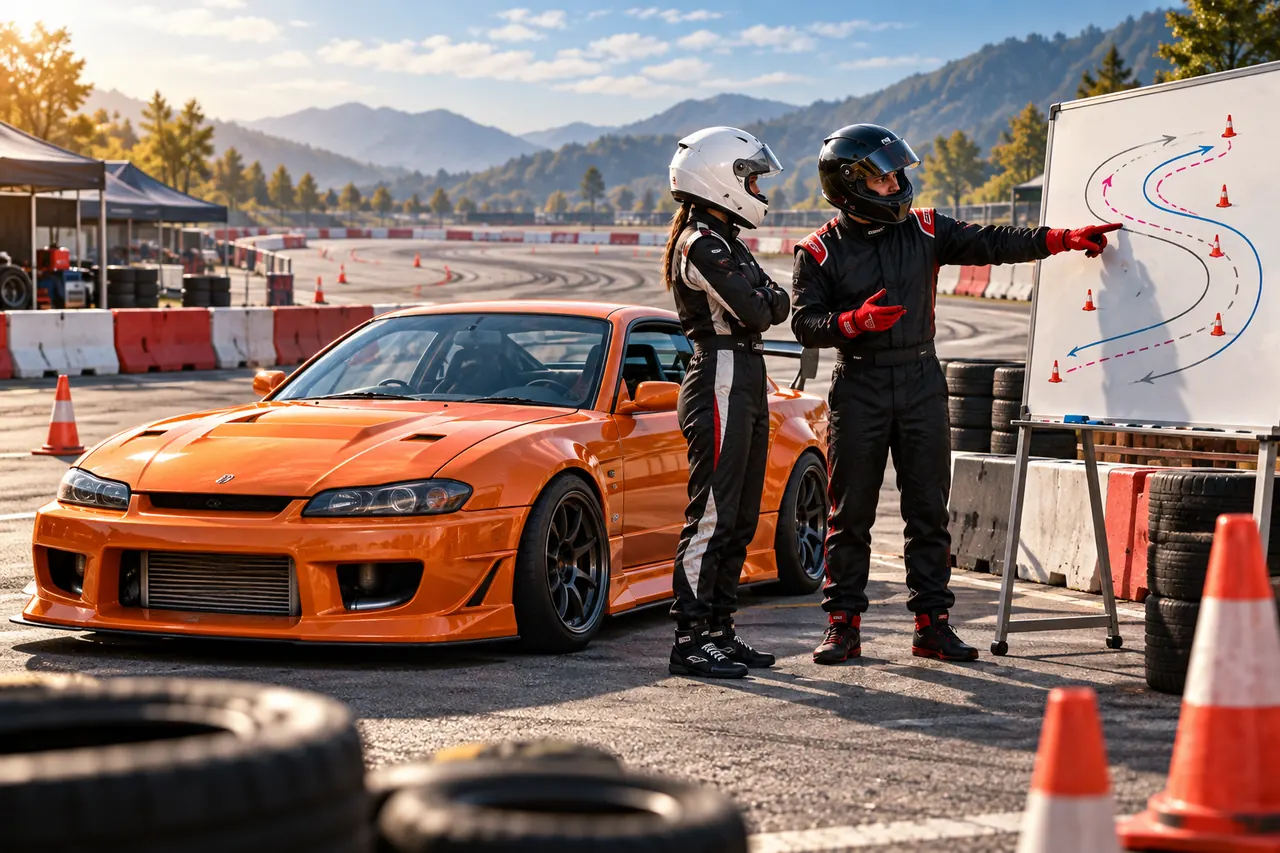
A cheap purchase can become an expensive way to spend very little time driving. Before choosing your first drift project, work backward from the events you can attend and the support you can realistically access. The useful question is not simply which car can drift. It is which complete plan you can sustain.
Choose the event, support network, and ownership budget together. A car that leaves no money for instruction or repairs is an unfinished plan.
Start with the nearest usable event
Identify an organizer that welcomes beginners and ask what cars and equipment it accepts. Record how often suitable days run, whether tuition is available, and what experience is expected. An event three hours away creates a different ownership plan from one nearby.
Work out how the car gets there and home. Include storage, loading arrangements if applicable, and a recovery plan if it cannot leave under its own power. You do not need to solve every future competition requirement now. You do need to know whether your first realistic venue and your proposed car belong in the same plan.
Compare platforms with a research matrix
Use the same questions for every candidate: Can a local specialist assess it? Are routine service parts easy for you to obtain? Are there knowledgeable owners nearby? Is the shell suitable for the intended project? What has already been modified, and how well is that work documented?
Separate platform reputation from the condition of the individual car. An admired model with unclear wiring, unresolved faults, or undocumented changes can be a harder project than its online reputation suggests. Collect written inspection findings and actual supplier information rather than awarding points for popularity alone. Leave unknowns marked unknown until you have an answer.
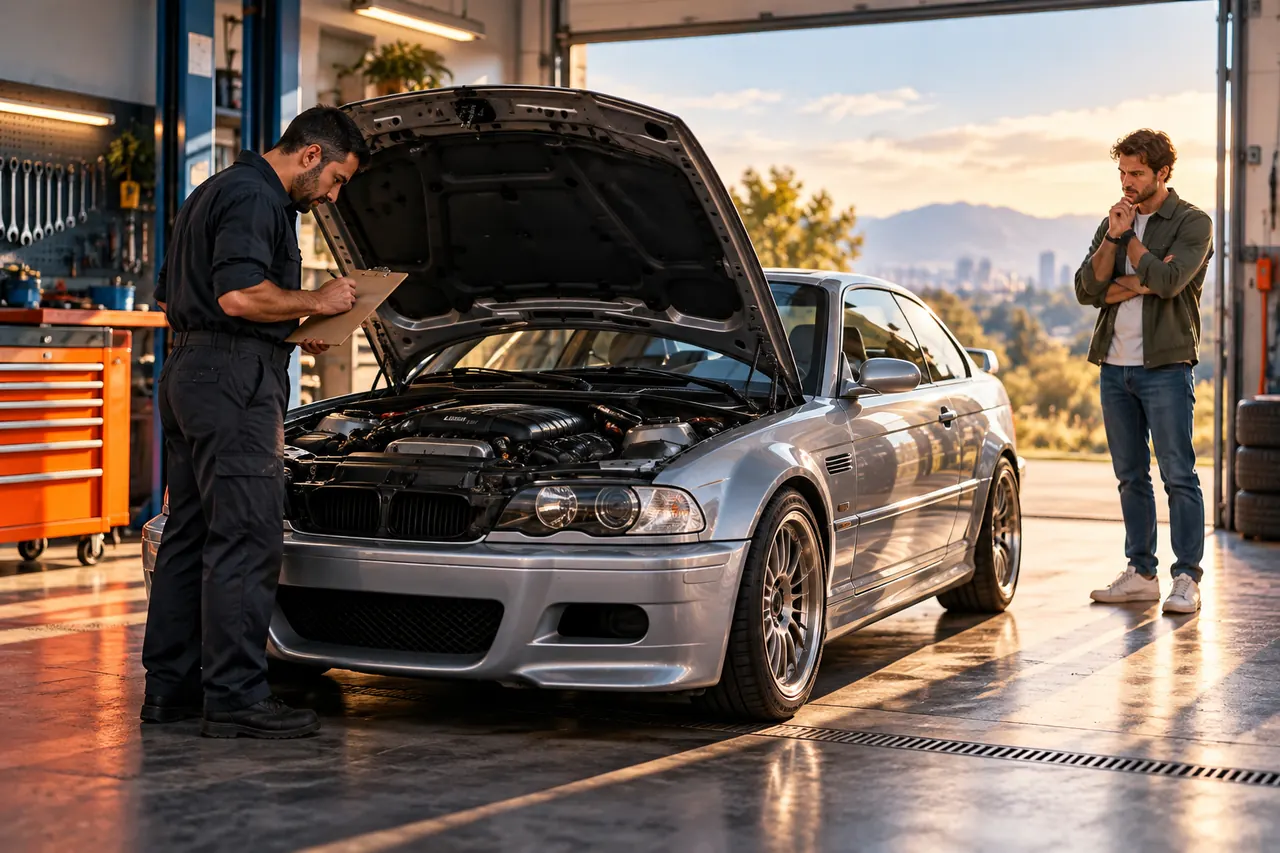
Treat the inspection as a buying input
Arrange an independent inspection by someone familiar with the intended vehicle and use. Tell them about the modifications and your plans before the appointment. Ask what they can assess, what requires further investigation, and what would make them advise against this particular car.
The FTC advises used-car buyers that a history report does not replace an independent mechanical inspection. That distinction matters even more when a seller presents a long parts list as proof that the car is sorted. Receipts help describe work; they do not establish its present condition. Do not place a value on modifications until their identity and condition are understood.
Budget one season, not one purchase
Create separate totals for acquisition, initial assessment and preparation, each event day, and ongoing ownership. Under event costs, leave space for entry, instruction, fuel, tires or other consumables, transport, and any accommodation. Under ownership, include storage and the services your actual plan requires.
Use quotes and your organizer's information for the numbers. There is no honest universal beginner drift-car price that covers every region, vehicle condition, and event schedule. Test a quieter scenario as well: if you attend fewer events than planned, will the fixed costs still feel worthwhile? Keep money for resolving an unexpected issue before adding a cosmetic wish list.
Build only to the next confirmed requirement
After the inspection and event briefing, define the smallest complete stage that gets the car ready for the next appropriate activity. Have a qualified specialist resolve safety and mechanical questions. Avoid copying a professional car's specifications simply because they appear in a build video.
Formula DRIFT publishes separate sporting, judging, and technical regulations for its competition structure. Those documents are helpful context, but they are not approval for a different organizer's event. Keep your event requirements, inspection notes, and parts research separate so the source of each decision stays clear. The first milestone is a usable, documented plan, followed by a supervised day you can afford to repeat.
A couple of good questions
Should I buy a modified car or a standard one?
Compare the individual cars, their documentation, an independent assessment, and the complete cost of your intended use. Neither label guarantees a better starting point.
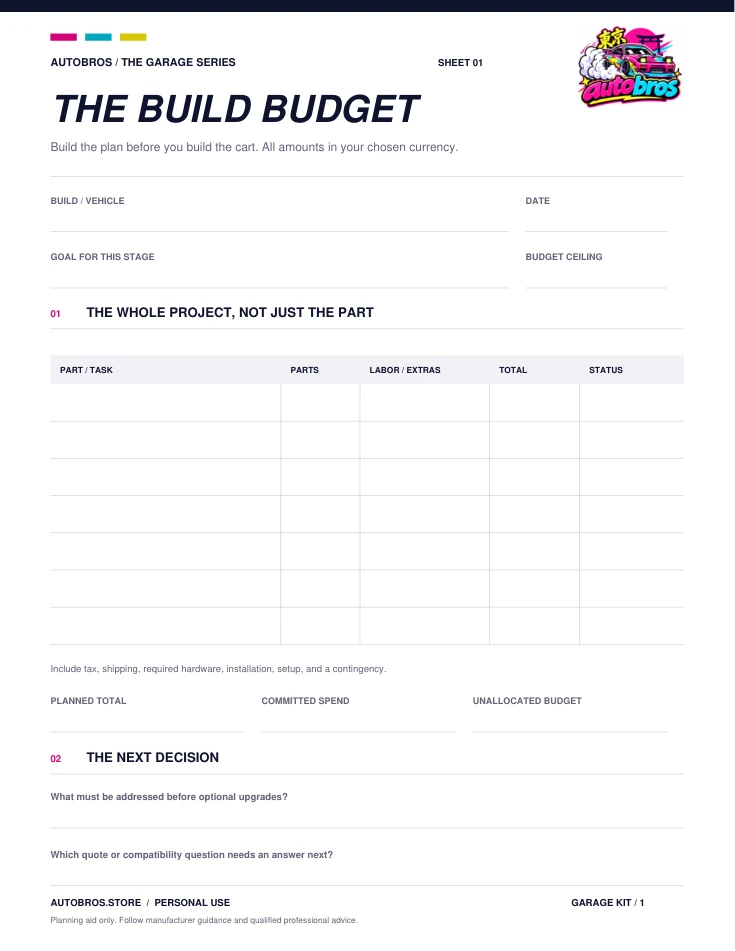
The build budget
Parts, labor, quotes, actual spend, and a little breathing room.
Fill in the free worksheet Blank PDFReferences & further reading
Sources reviewed October 13, 2026. Product facts are manufacturer or retailer information, not an Autobros test. Confirm current instructions before acting.
FTC — buying a used car from a dealer and independent inspections Formula DRIFT — current sporting, judging and technical rulebooks