The best first drift story does not need to start with buying a car. It can start with a booked lesson, a clear understanding of the day, and a small notebook. Watching the sport, trying it with instruction, and building a dedicated car are three different projects. You do not have to commit to all three at once.
Book the learning experience before building a shopping list. Choose a supervised, closed-course setting and let the instructor set the progression.
Choose the kind of day you actually want
A spectator ticket, a passenger ride, an introductory lesson, and an open practice day offer very different experiences. Decide whether you want to watch, sample the feeling, or spend time learning behind the wheel. A beginner lesson is the useful starting point if learning is the goal; an event described as open practice may assume skills you do not yet have.
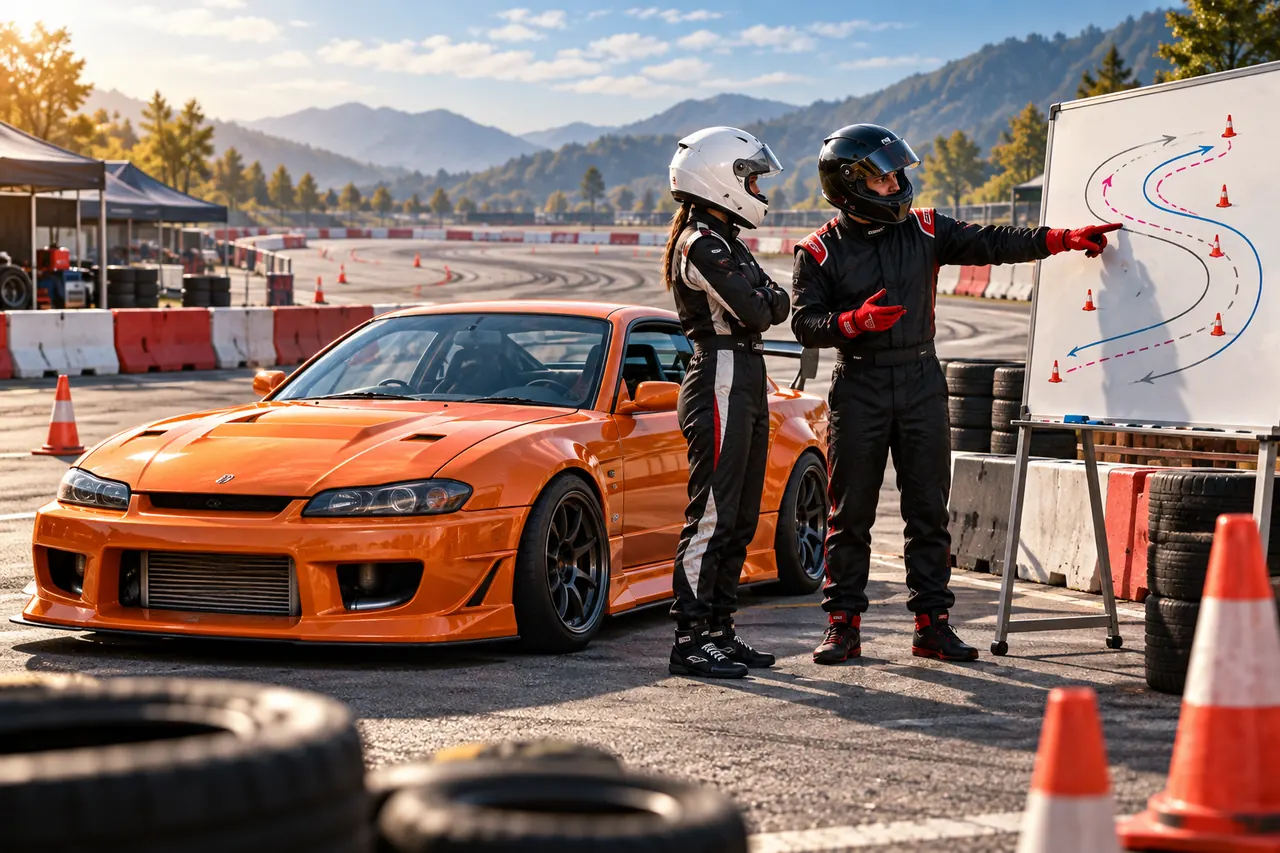
Ask who teaches beginners, how instruction is delivered, and how the organizer separates different experience levels. Drift 101, for example, describes on-track guidance without an instructor sitting in the car. That is a reminder to ask about the actual format instead of assuming every school provides the same experience.
Compare the complete booking
Make a comparison sheet with five rows: instruction, car, consumables, personal equipment, and booking conditions. Record what is included and what requires an additional payment. Ask about time actually allocated to driving, whether you share a car, and what happens during maintenance or weather interruptions.
Read the damage-responsibility terms before paying. Ask whether a deposit or other financial responsibility applies and get the answer in writing. The lowest advertised price is not necessarily the lowest complete cost. Your personal comparison should include travel, accommodation if needed, and time away from work alongside the course itself.
Let the organizer define eligibility and preparation
Send the organizer your experience level and ask for the current requirements. Confirm age or licence conditions, accepted clothing and equipment, accessibility needs, and whether you will use a supplied car or your own. Rules at one school are not universal rules for drifting.
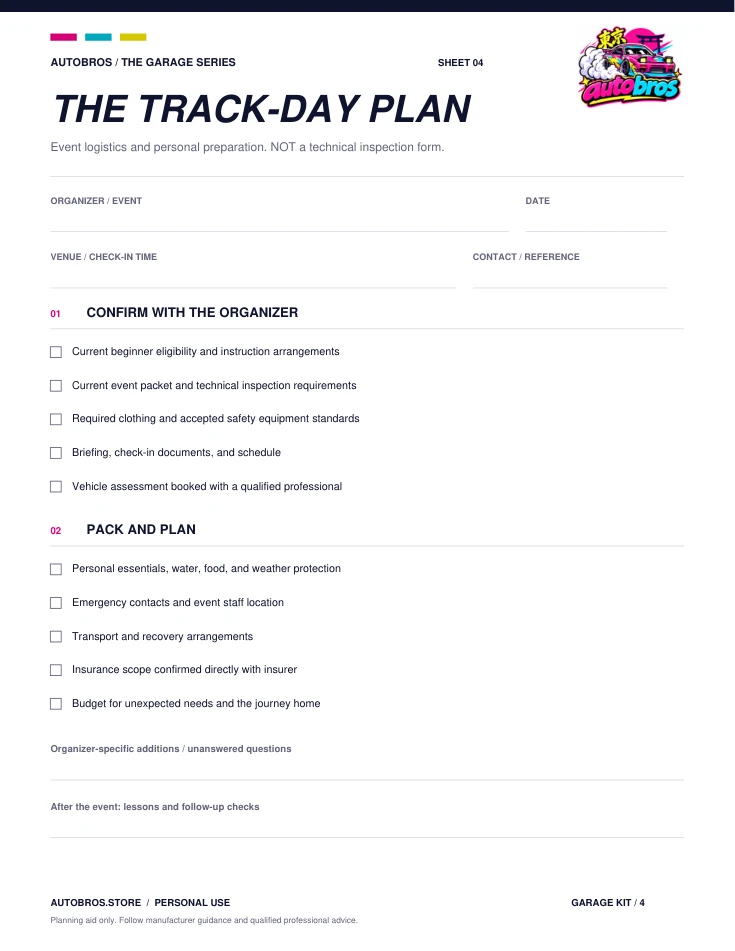
If bringing your car is allowed, obtain the event's technical requirements before booking an inspection or buying equipment. Do not turn a professional competition rulebook into a beginner shopping list. The requirements for a local instructed session and a championship car can be very different. Use the track-day worksheet to hold the organizer's answers in one place.
Arrive with one learning goal
Tell your instructor what you have driven before, including if your experience is mostly in a simulator. Ask what a realistic first-session goal looks like. A useful goal might be understanding the course instructions and repeating the assigned exercise with more consistency. It does not need to be a dramatic video.
During the day, work through the instructor's progression, take the breaks they recommend, and ask for clarification when a cue is unclear. Keep all practice at an authorized, controlled venue. A car park or a quiet road is not a substitute for an organized learning environment.
Debrief before you buy anything
After the session, write three notes: what felt more natural than expected, what needs coaching, and what you would change about the next booking. Ask the instructor for the next useful step while the session is still fresh. Then compare the cost of another lesson with the full commitment of owning a dedicated car.
If you enjoyed the day but cannot regularly reach a venue, occasional instruction may fit your life better than a project car. If you want to keep going, start researching local events and their requirements before researching parts. Your next purchase should serve the next learning goal, not the best-looking car in the paddock.
A couple of good questions
Do I need to own a drift car first?
Not necessarily. Ask schools whether a vehicle and consumables are included. Compare their complete course terms before deciding whether ownership makes sense.
Track-day prep
Event logistics and personal packing. Not a technical inspection.
Fill in the free worksheet Blank PDFReferences & further reading
Sources reviewed October 13, 2026. Product facts are manufacturer or retailer information, not an Autobros test. Confirm current instructions before acting.
Drift 101 — course questions and instruction format Formula DRIFT — current sporting, judging and technical rulebooks