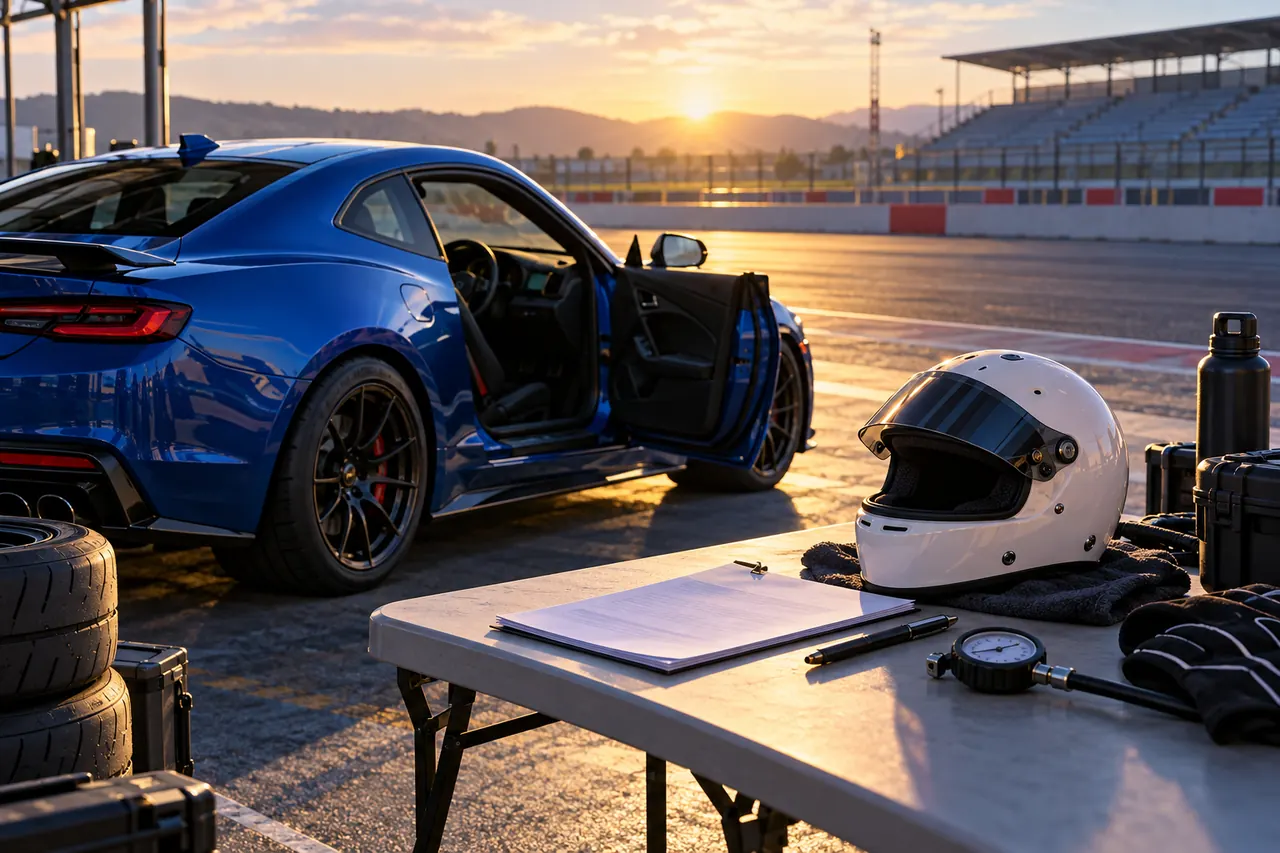
Before you order a helmet, book a hotel, or decide your car needs more power, choose the event you are actually considering. The first useful document is the organizer’s current event packet. The second is a list of questions you have not answered yet.
This guide covers planning for an organized, instructed driving event. It is not driving instruction, a technical inspection, a safety-equipment certification guide, or a promise that your car is eligible. Keep performance driving at controlled venues and follow the event’s current requirements.
Book the learning. Confirm the requirements. Let the next purchase earn its place.
Choose an event that explains the beginner experience
Look for a clear description of how first-time participants are supported. NASA describes HPDE 1 as a beginning group with one-to-one instruction and limited passing. That is an example of the kind of structure to investigate—not a promise that every event uses the same format.
Ask who you will contact before the day, how instruction is arranged, and what happens if you are uncomfortable proceeding. A welcoming explanation is more useful than a dramatic highlight reel. You should understand the learning environment before paying.
Also distinguish an instructed track day from a drift clinic, an autocross, a competition, and an open practice session. Do not assume requirements or expected skills transfer between them. Choose the activity first; research the relevant rules second.
Build your plan from the actual organizer’s documents
Save the current event page, registration conditions, schedule, and technical-inspection requirements with their dates. Look for vehicle eligibility, personal eligibility, clothing and equipment rules, and any special requirements relevant to your car. Ask the organizer about anything ambiguous.
Do not buy a helmet solely because an older blog says a particular certification is accepted. Ask for the current accepted standards and any fit or additional requirements. Ask whether rental or loan equipment is offered, rather than assuming it will be there.
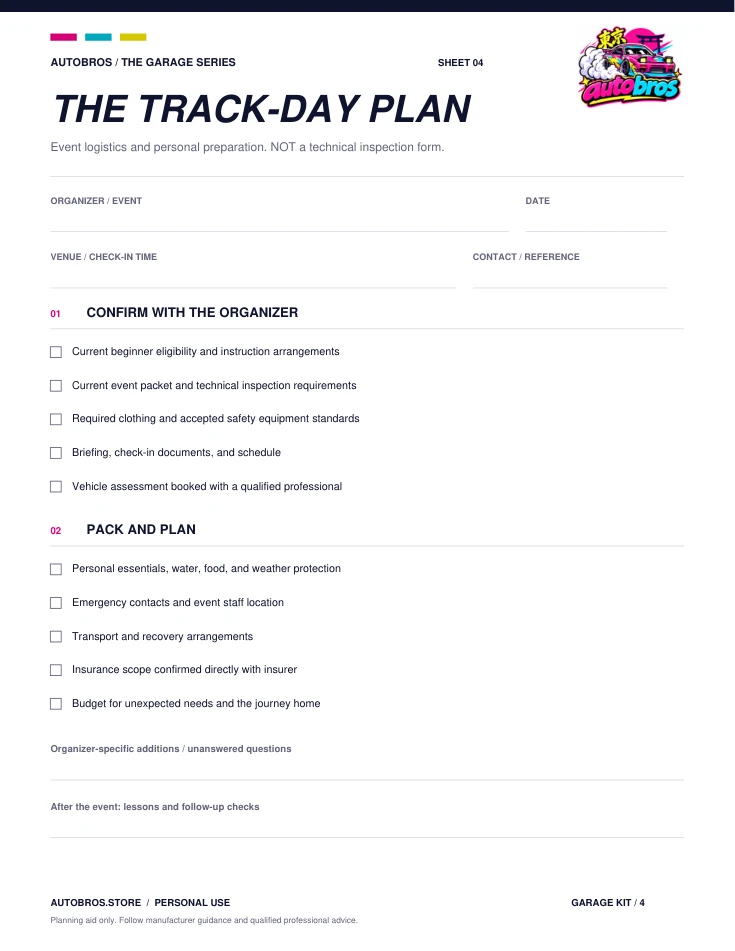
The Autobros worksheet has space for these answers, but it deliberately does not reproduce a universal technical checklist. The organizer’s current requirements are the source of authority for that event, and a qualified assessment of your vehicle remains a separate step.
Arrange the vehicle assessment early
Give the current event requirements to an appropriately qualified professional and discuss the car’s condition, history, and relevant modifications. Leave enough time to address anything they identify. Do not use the last evening before departure as your first conversation about eligibility.
Ask the professional what you should monitor before, during, and after this specific activity, and what would be a reason not to continue. Record their instructions accurately. Generic advice from another vehicle’s owner is not an adequate substitute.
Keep any required inspection paperwork accessible. A receipt for a recent part is not the same as confirmation that the whole vehicle meets the event’s requirements. If an issue remains unresolved, change the plan rather than letting travel reservations make the technical decision.
Budget for the whole day, including the way home
The entry fee is only one line in the plan. Create fields for required membership if applicable, vehicle assessment, specified equipment, travel, food, accommodation if needed, and any additional arrangements. Use actual quotes and your own travel inputs rather than a generic “track days cost this much” figure.
Ask your insurer directly about coverage for the activity, location, vehicle, and dates. Get the scope and exclusions in writing. Do not infer coverage from the fact that the vehicle has an ordinary road policy, and do not treat this article as insurance advice.
Decide in advance how you would get yourself and the car home if the car cannot make the return trip. Knowing whom you would contact is part of planning, not pessimism.
Pack for attention, not for an impressive paddock photo
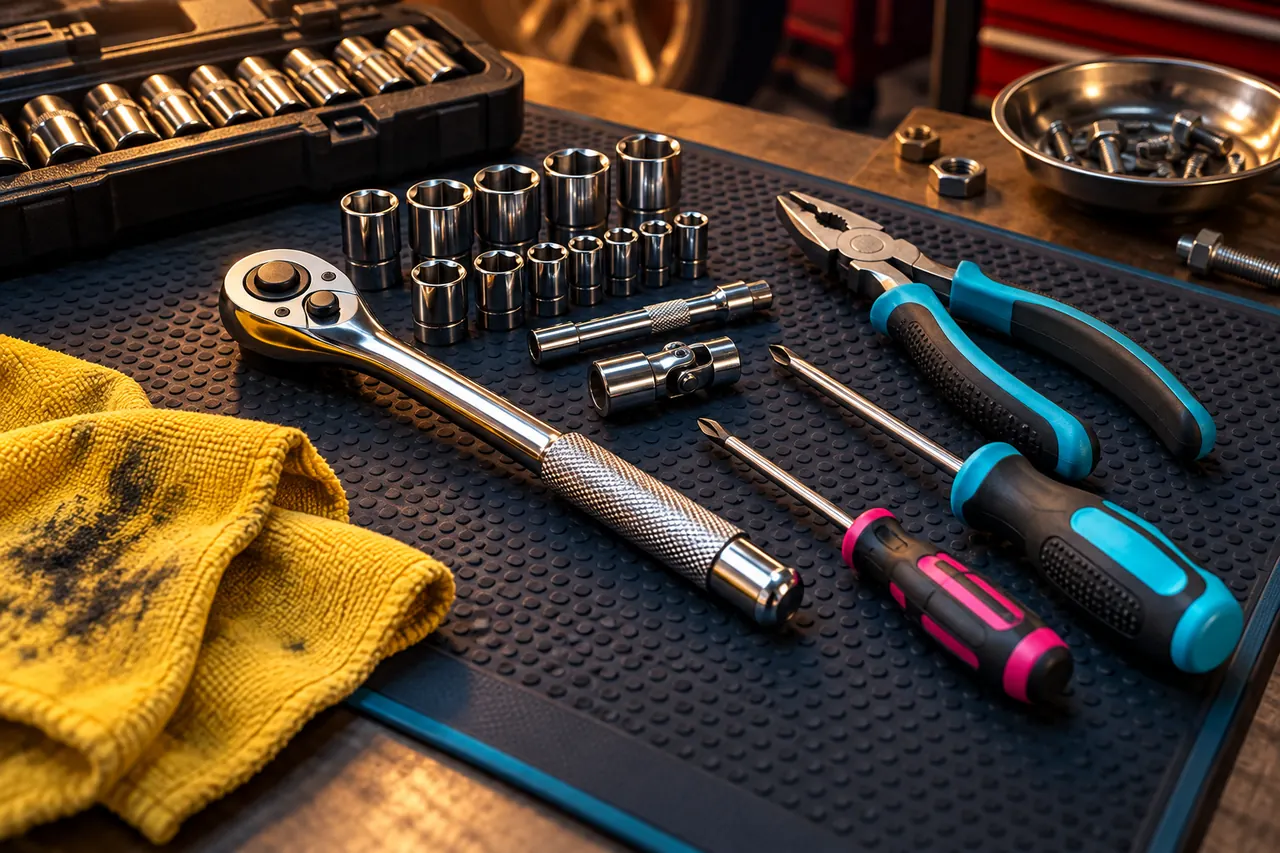
Prepare the paperwork, required equipment, personal essentials, weather-appropriate items, food, and water allowed by the venue. Ask about facilities rather than assuming you can purchase everything there. Make a small list from the event packet and the organizer’s answers.
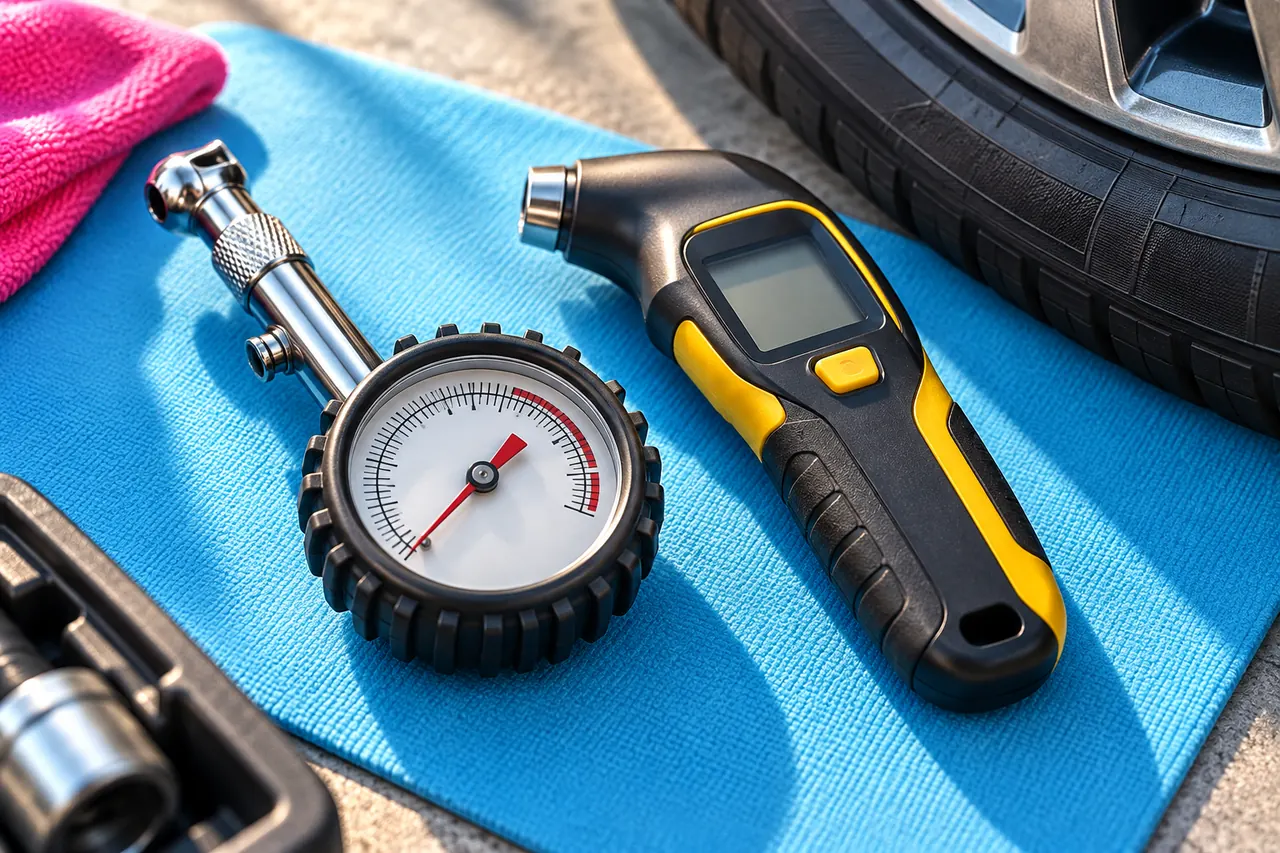
A tire gauge may be useful when the organizer or qualified professional explains how it belongs in your plan. The one in our research shelf is a buying candidate, not an instruction to use a particular track pressure. Do not apply a stranger’s setup to your car.
Keep the schedule and contact information available without depending entirely on a phone signal. Arrange the day so that check-in and briefings do not become a last-minute rush. Being prepared to listen is more valuable than arriving with accessories you do not know how to use.
Make the learning the result
Use the first event to learn the process, ask questions, and follow instruction—not to produce a number for social media. Tell your instructor what you do not know. If something feels unclear or the car needs attention, involve the appropriate event staff instead of improvising.
Afterward, write down what you learned, what remains uncertain, and what follow-up the professional or organizer recommended. Then decide what would genuinely help before a future event. You may discover that the next purchase is unnecessary, or that a different practical priority has emerged.
The free Track-Day Plan keeps organizer details, logistics, and questions together. It is intentionally not a technical sign-off form. Its job is to help you arrive prepared for instruction and leave with a clearer understanding of your next step.
A couple of good questions
Should I modify my car before my first event?
Do not assume you need upgrades. Discuss your exact car and the current event requirements with the organizer and an appropriately qualified professional.
Is the printable a technical inspection form?
No. It is a planning aid. Use the organizer’s required forms and inspection process.
Track-day prep
Event logistics and personal packing. Not a technical inspection.
Fill in the free worksheet Blank PDFReferences & further reading
Sources reviewed September 29, 2026. Product facts are manufacturer or retailer information, not an Autobros test. Confirm current instructions before acting.
NASA — High Performance Driver Education