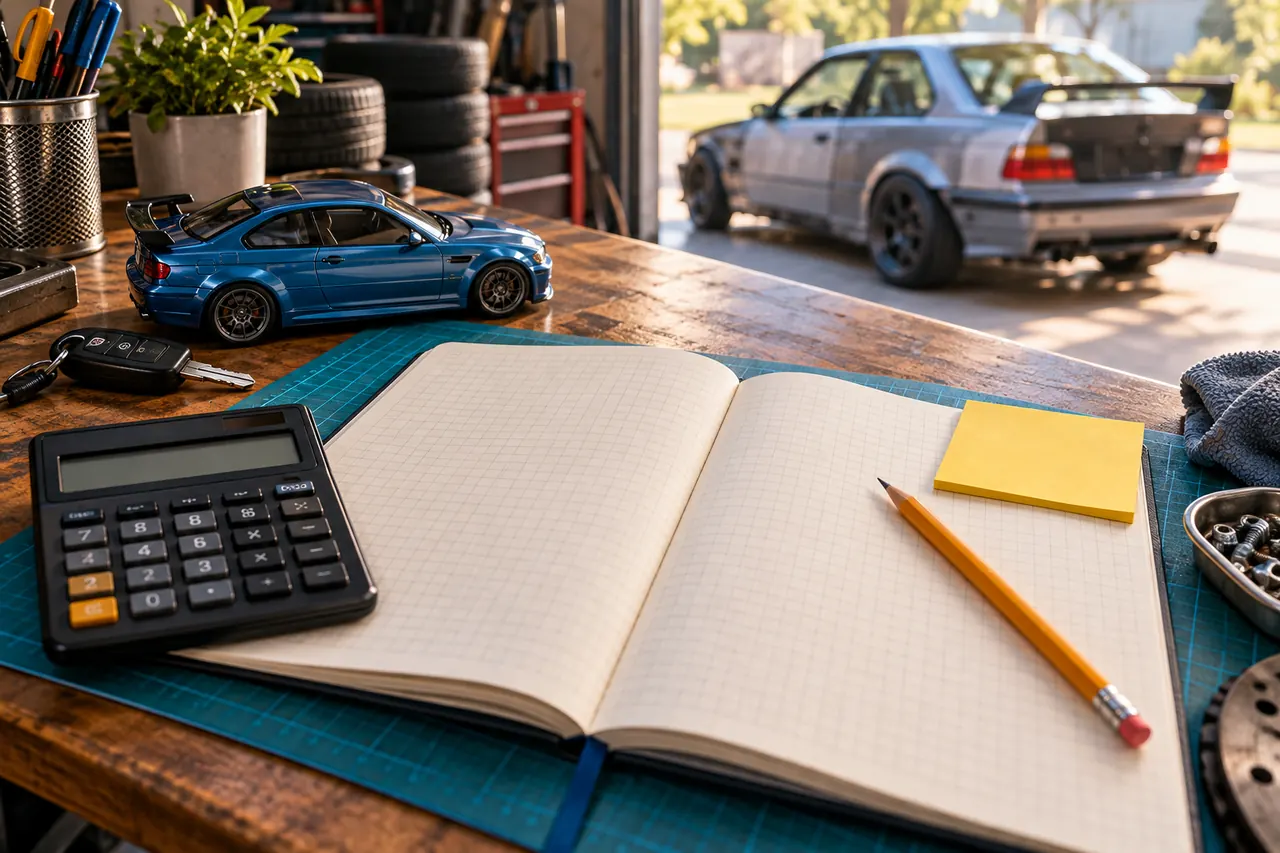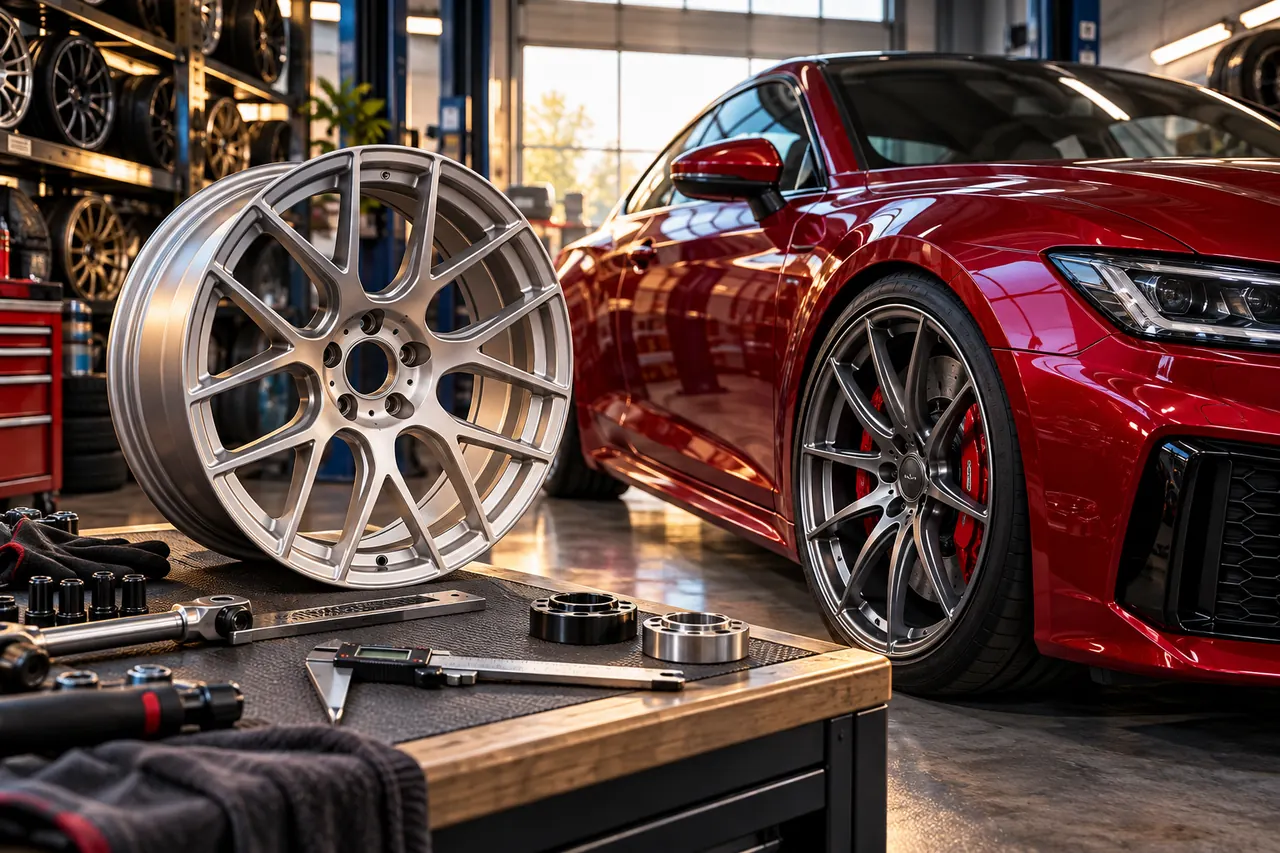
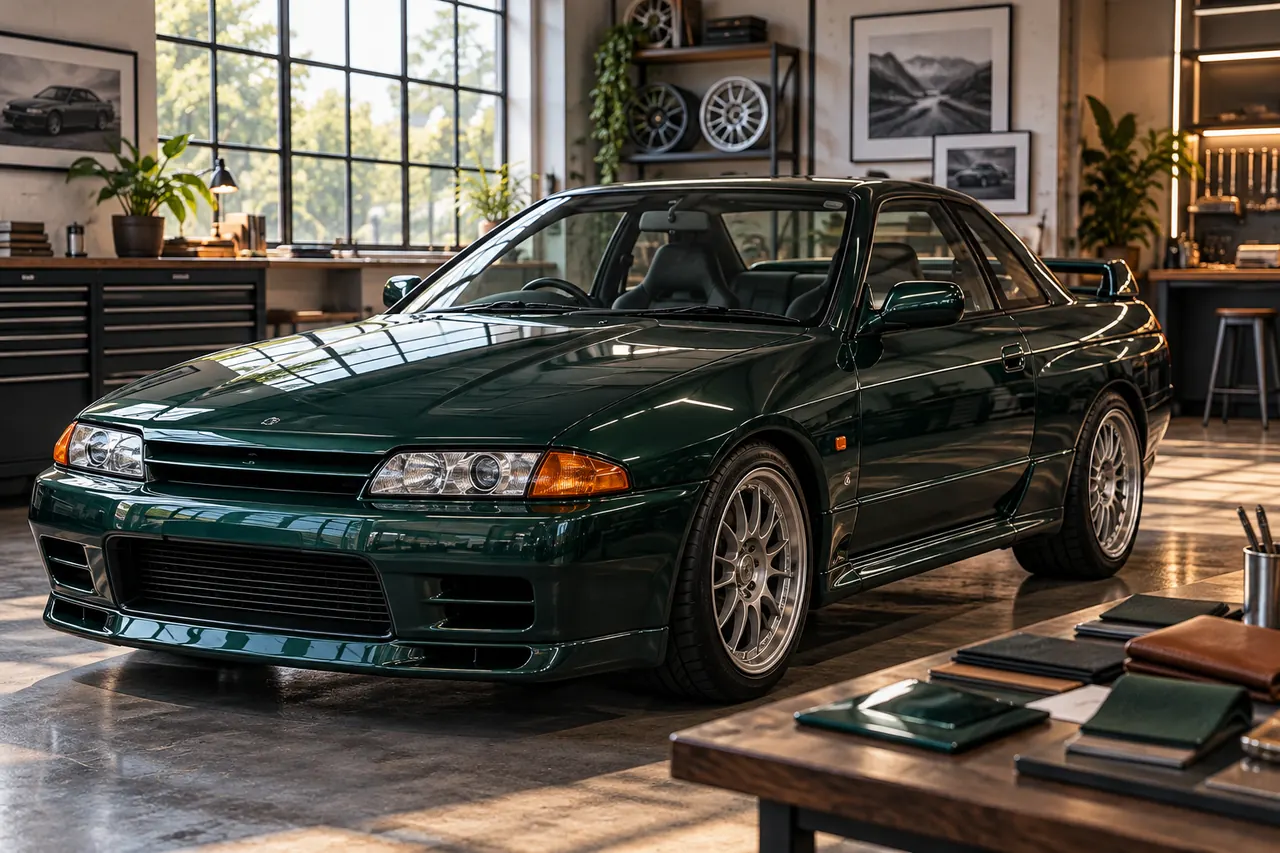
A great build often feels deliberate before you can explain why. The details belong together. The temptation is to copy all of them, but the more useful move is to work out the idea behind them. Here is a way to turn a mood board into a build brief you can actually use.
Choose what you want to preserve before choosing what you want to change. Consistency comes from a clear brief, not from the number of parts.
Use the labels to describe your intention
JDM refers to the Japanese domestic market; it is not a precise synonym for every modified car from a Japanese brand. In enthusiast conversation, OEM+ generally suggests a factory-like visual or functional approach with selected improvements. Restomod commonly describes restoration combined with modern modifications. The latter two labels are informal, so explain what they mean for your project.
Do not let a label become a parts requirement. A car can reflect Japanese styling influences without pretending to be a rare domestic-market specification. An honest build description is more interesting than a badge trying to do all the storytelling.
Write a preservation list
Choose three characteristics that must survive the project. Perhaps you like the original proportions, the cabin materials, and the way the car feels at everyday speeds. Photograph or describe those qualities before collecting ideas for changes.
Then write the practical problems you want to solve. Separate wear or damage from a design preference. A tired component may need assessment; disliking a color is a different kind of decision. This distinction helps you avoid turning every age-related issue into a reason to redesign the whole car. Give each proposed change a clear purpose in your brief.
Make the mood board specific
Limit your first board to a small group of references and annotate each one. Are you borrowing a color relationship, a wheel design language, a trim detail, or a sense of restraint? Identify the quality rather than writing only the model name.
Remove references that fight each other. If one image is about factory subtlety and the next is about an extreme show-car silhouette, decide which belongs to this stage. You can appreciate both without blending them into one project. Keep a separate inspiration archive for ideas you enjoy but are not using, so deleting them from the brief does not feel like losing them.
Keep the interesting tradeoffs visible
A modern feature can improve one part of ownership while changing another. Ask how a proposed modification affects service access, everyday comfort, reversibility, and the original detail you wanted to preserve. Get fitment and installation questions answered by the appropriate specialist before ordering.
SEMA's 2026 magazine coverage highlights import restomods as a topic of interest. That creates plenty to explore, but it does not make every fashionable change right for your car. Document why your chosen approach fits your own use. A restrained project with a clear reason can be more satisfying than a larger build assembled from unrelated trends.
Finish one coherent chapter
Give the next stage a title, a limit, and a visible finish line. For example: refresh the cabin's appearance while keeping its original character. List the inspection or research needed, the complete cost, and what you are deliberately leaving for later.
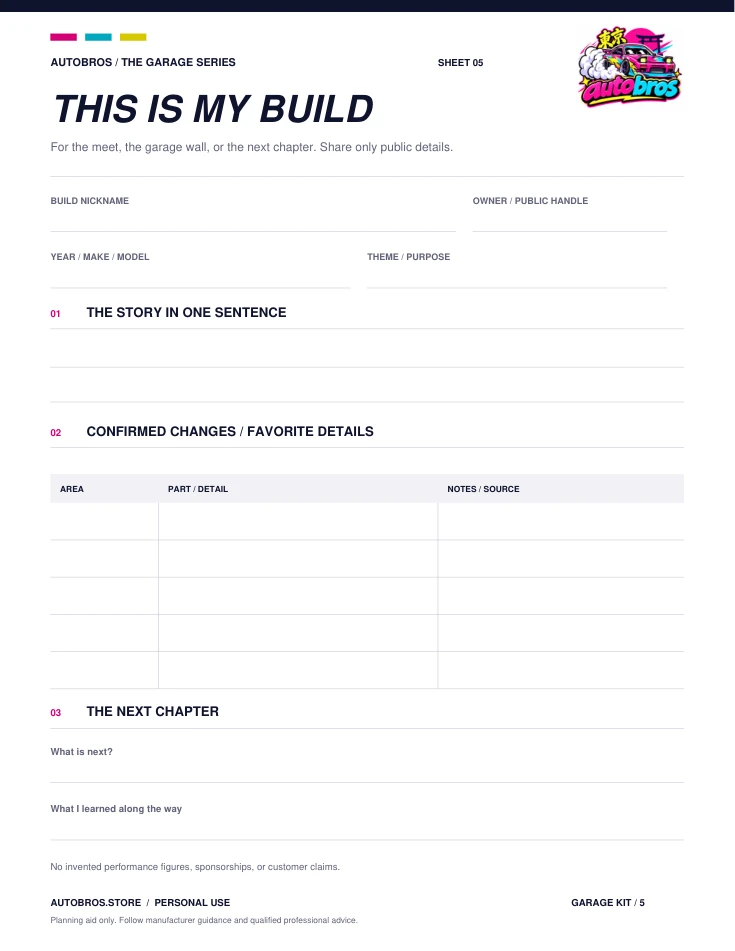
Use a before-and-after build card to record what changed and why. Keep removed parts when appropriate, record exact versions of replacement items, and preserve useful service documentation. If you share the project, explain the compromise you solved. That gives other owners something they can learn from, even if their taste and budget are different from yours.
A couple of good questions
Does OEM+ mean every part must be original equipment?
People use the term differently. Describe the actual parts and the intended factory-like character rather than treating an informal label as a technical specification.
Your build card
A clean, honest spec sheet for your next car meet.
Fill in the free worksheet Blank PDFReferences & further reading
Sources reviewed October 13, 2026. Product facts are manufacturer or retailer information, not an Autobros test. Confirm current instructions before acting.
SEMA — May/June 2026 magazine coverage of import restomods