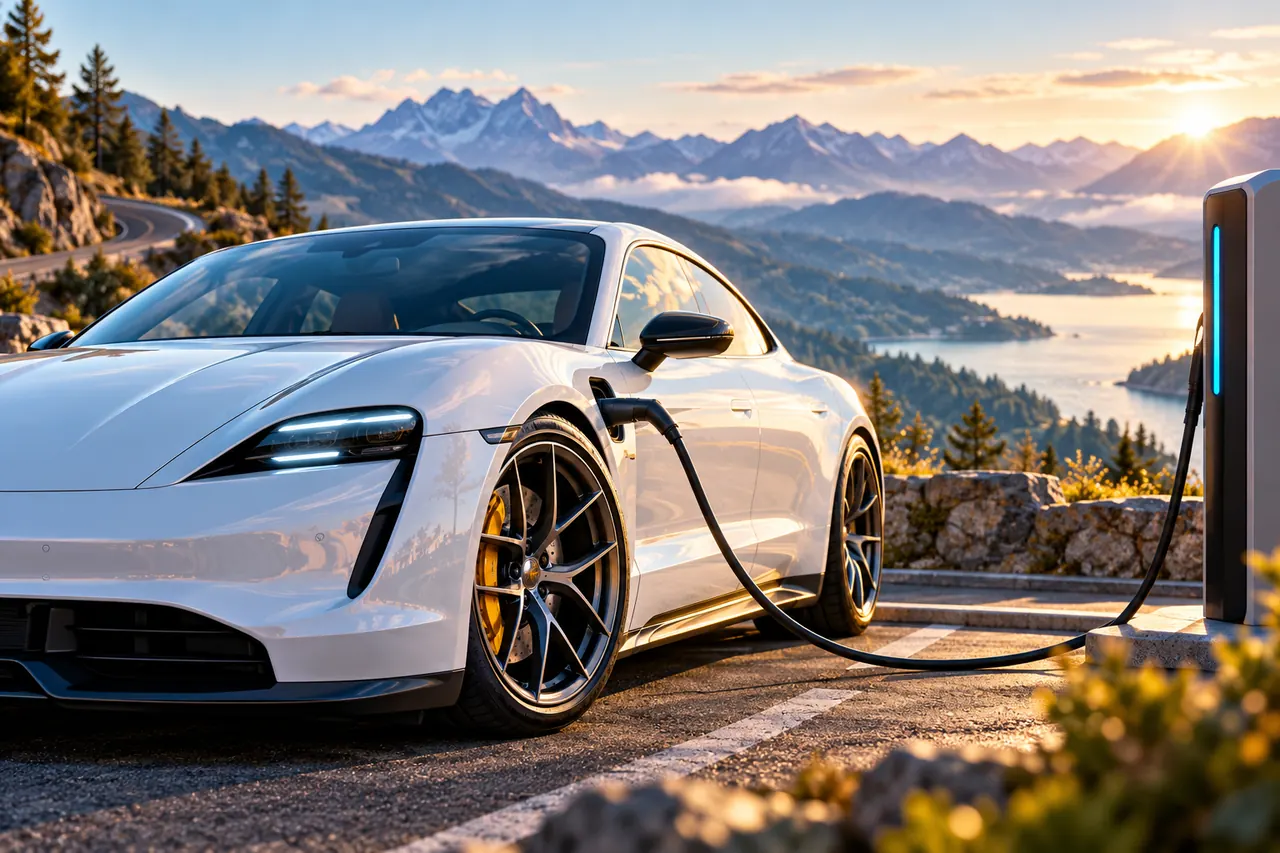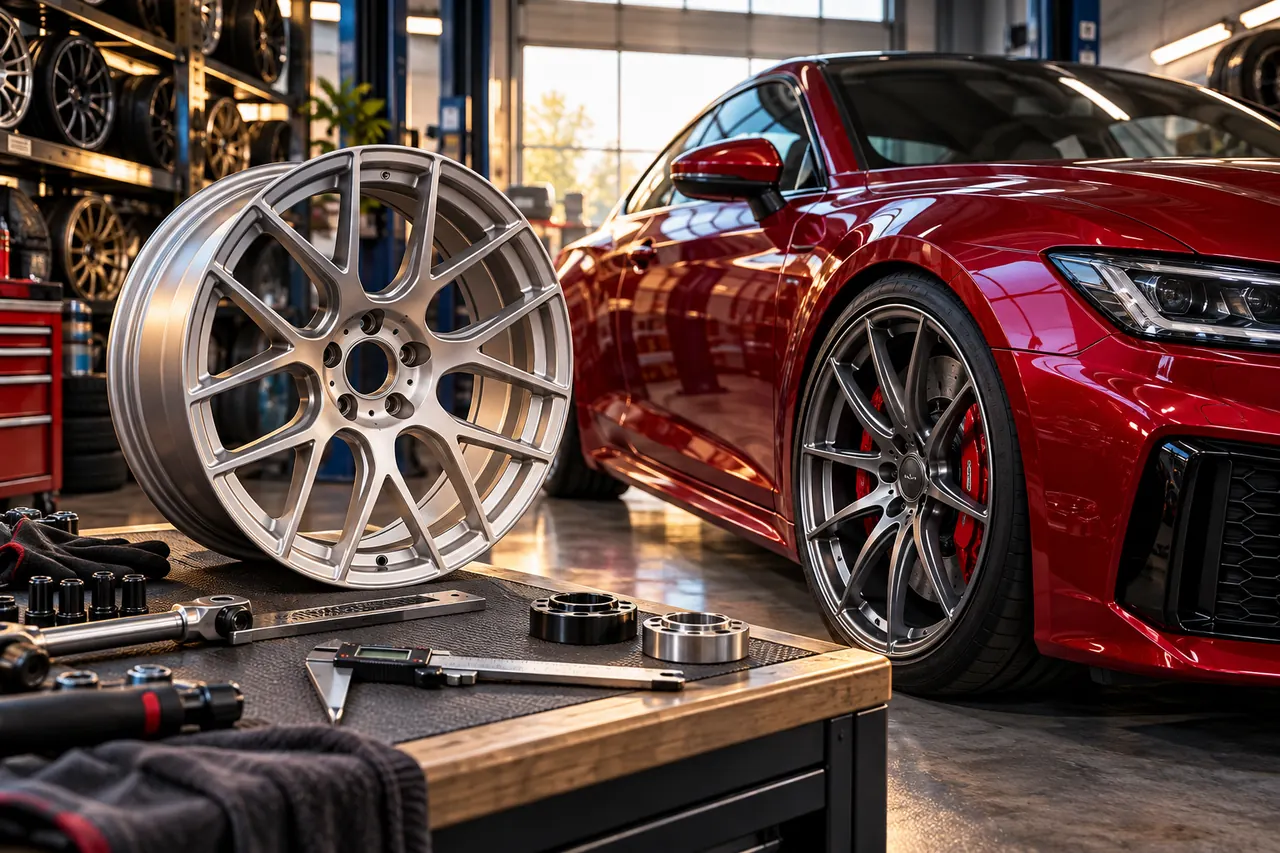
EVs can be wonderful canvases for personalization: accent wraps, interior storage, wheel styles and better everyday organization. They also have components that require specialized service and high-voltage training. This guide separates owner-friendly ideas from work that belongs with qualified EV technicians and vehicle-specific documentation.
Make your EV more personal without experimenting on high-voltage systems, safety sensors or unsupported charging hardware.
Start with the exact EV configuration
Record the model year, trim, battery and drivetrain variant, factory wheel sizes, tire specification, installed sensors and any software-dependent options. An aftermarket item advertised for the same model name might not fit your production year or brake setup. Keep the owner's manual handy and document current warning messages or outstanding recalls before ordering accessories.
Begin with nonintrusive visual changes
Explore a quality exterior accent wrap, distinctive but readable interior organization, floor protection that fits the retention points, and removable accessories. A partial wrap can be a lower-commitment way to personalize the roof or mirror caps. Do not cover charging-port seals, camera housings, lights, driver-assistance sensors or required labels. Ask your wrap installer about heat exposure and the vehicle's unusual panel contours.
Treat wheel and tire changes carefully
Wheels affect much more than appearance. Confirm load rating, fitment, brake clearance, tire capacity and vehicle manufacturer guidance. An EV's weight, recommended inflation and efficiency characteristics can make a fashionable wheel setup a poor match. Compare the expected effect on ride, range, traction, noise and cost without assuming a universal percentage. Continue cold-tire checks and inspect wear regularly.
Keep charging accessories model-appropriate
Check vehicle and charger instructions for the correct connector, charging specification and safe installation. Do not buy adapters or extensions simply because the plug seems to fit. Electrical work for home charging should comply with applicable requirements and be performed by qualified professionals. Avoid DIY changes to charging contacts, power-handling hardware and high-voltage components; a convenience accessory is not worth an electrical hazard.
Know the high-voltage boundary
NHTSA is explicit that traction-battery service needs trained technicians and specialized protection and diagnostic equipment. Do not attempt to open battery enclosures, work on orange high-voltage cables, defeat battery-management controls or modify high-voltage cooling systems. Even after shutdown, systems may remain hazardous. Flood damage, impact damage, unexpected faults and burnt smells should prompt professional evaluation rather than amateur troubleshooting.
Make the build reversible where possible
Keep original trim and carefully document every change. Ask vendors whether accessories affect warranties, safety systems, OTA software updates or insurance terms. After an installation, confirm that charging, cameras, lighting, wipers, seat adjustment and driver-assistance functions still operate as designed. If the car develops an error message, stop adding modifications and diagnose the problem through the appropriate service channel.
A couple of good questions
Can I modify my EV's battery pack at home?
No. High-voltage traction-battery work requires qualified EV-specific technicians and protective equipment.
Do EVs need tire maintenance?
Yes. Check cold pressure, tread, age and fitment using the vehicle manufacturer's requirements just as you would for other cars.
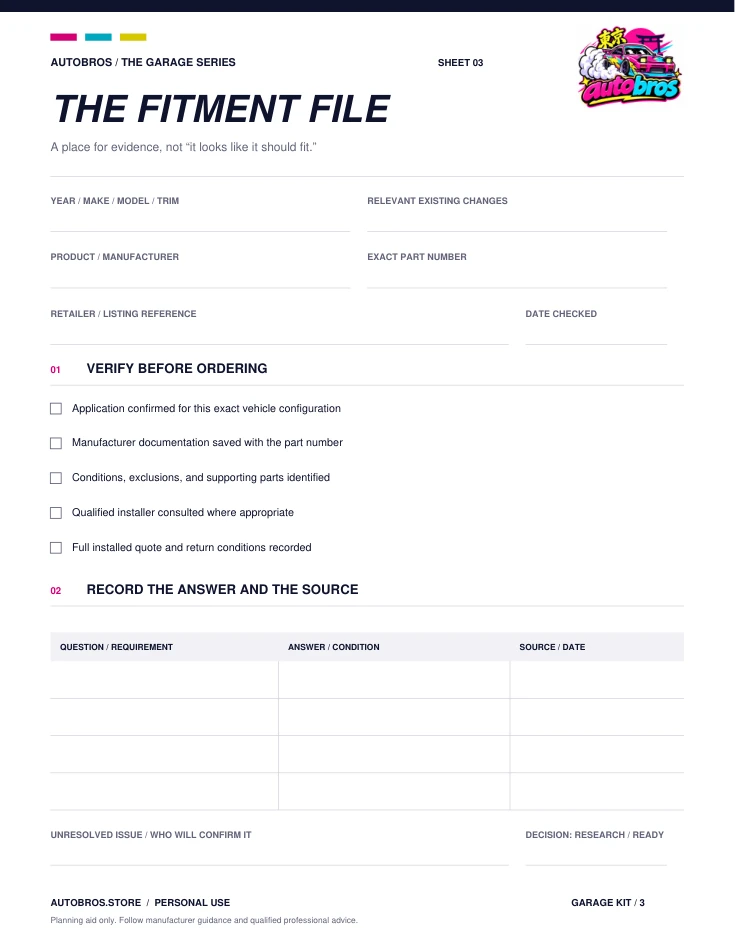
Fitment research sheet
One place for part numbers, compatibility questions, and sources.
Fill in the free worksheet Blank PDFReferences & further reading
Sources reviewed October 24, 2026. Product facts are manufacturer or retailer information, not an Autobros test. Confirm current instructions before acting.
NHTSA — Electric and hybrid vehicle battery, charging and safety NHTSA — Check for safety recalls 3M — Vehicle wrap questions and maintenance NHTSA — TireWise: tire pressure, tread and maintenance