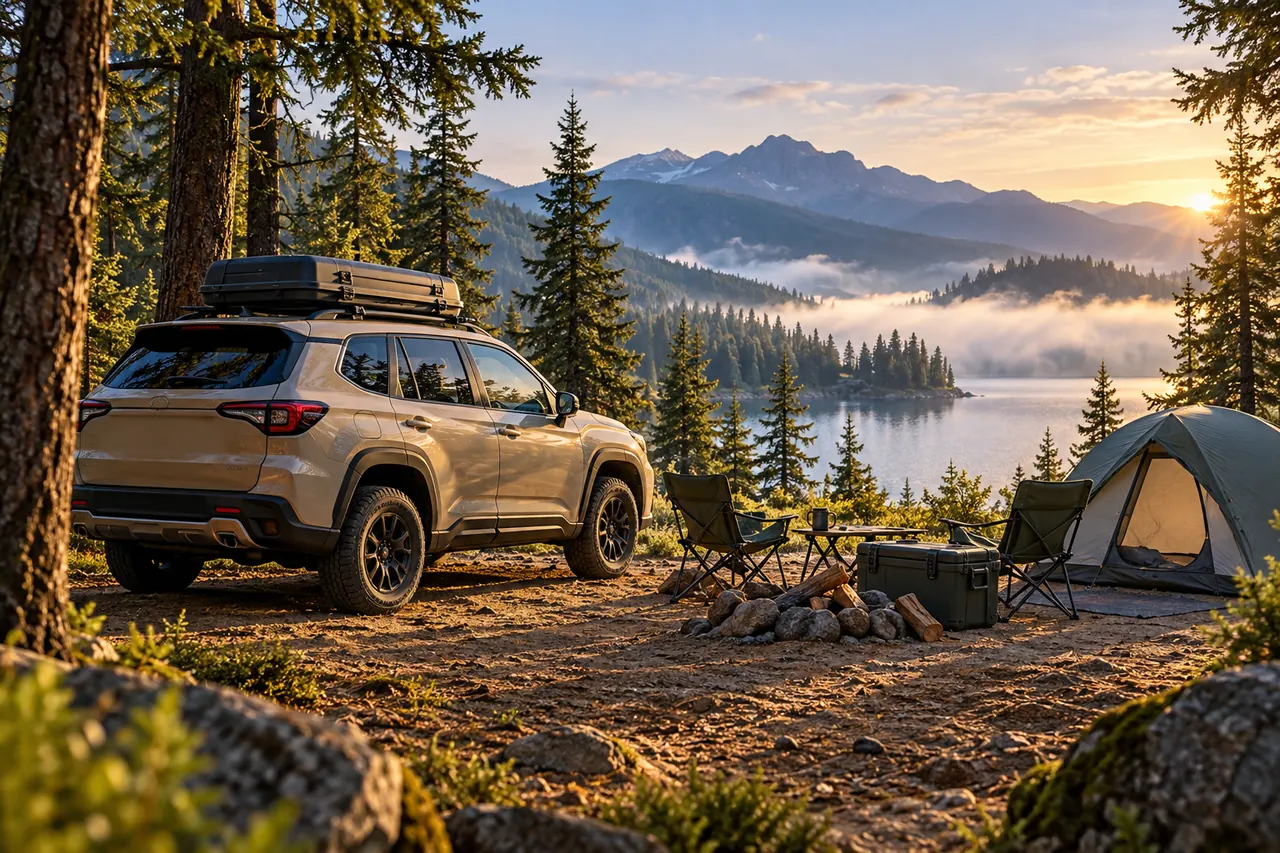
A carefully packed vehicle beside a beautiful campsite is easy to want. The quieter question is what kind of trip you would enjoy enough to repeat. Start there. You may discover that a simple outing with familiar equipment tells you more than weeks spent comparing an expedition build you have not used.
Let the trip define the equipment. Start with a suitable route, a sound vehicle, and a manageable plan, then improve the things you actually use.
Recognize the trend without inheriting the shopping list
SEMA's 2026 market release describes substantial spending on pickup and SUV modifications. That is useful context for the volume of off-road-inspired products and builds you see. It is not evidence that your own weekend requires a lift, oversized tires, or a rooftop tent.
Write a plain-language trip brief: who is coming, how long you will be away, where you will sleep, and what level of road access the destination requires. If you mainly want an easy campsite and a scenic day out, let that be a complete goal. You do not need to turn it into a remote expedition to make it worthwhile.
Choose the destination before changing the vehicle
For a first outing, favor a destination whose access requirements and facilities you can confirm with the land manager or operator. Check current conditions, bookings, closures, and any vehicle restrictions. Match the trip to the vehicle and your experience; do not use equipment purchases to justify an unsuitable route.
Make a fallback plan for weather or a closure. Agree on a turnaround decision before leaving. If an unfamiliar surface or route calls for skills you do not have, choose a different outing or seek suitable instruction. This article is about planning the experience, not a guide to recovery or difficult terrain.
Build a packing plan around the people
List the jobs your equipment must do: sleeping, food, water, clothing, communication, and keeping the vehicle organized. Start by checking what you already own. Borrow or rent appropriate items when that helps you learn your preferences without committing to a complete system.
Consider how the group will use the space in bad weather and at the end of a tiring day. A neatly photographed setup may be awkward when several people need something at once. Pack the essentials where they can be reached without unloading everything. The best arrangement is one your actual group can understand and repeat.
Respect the vehicle’s limits
Use the exact vehicle's manual and manufacturer guidance for load, roof, towing, and equipment requirements. Accessories, passengers, and luggage all belong in the plan. Do not infer a capacity from the appearance of a rack or a similar vehicle in a video.
Have unresolved mechanical issues assessed before the trip and follow the relevant maintenance guidance. Confirm any accessory installation with its manufacturer or a qualified installer. For the first outing, a simpler packing arrangement may be preferable to introducing multiple untested systems at once. Keep the complete setup manageable enough that you can check it methodically.
Keep a used-it, missed-it, left-it log
After the trip, sort equipment into three groups: used regularly, wished you had, and carried without using. Add a note about inconvenience rather than immediately naming a product. Perhaps the problem was poor access to water, not the absence of a larger storage system.
Choose one improvement for the next outing and test it. Keep the same basic trip style long enough to know whether the change helped. A personal setup develops through actual use. That gives your build a story rooted in experiences you enjoyed, instead of a collection of promises made by a shopping cart.
A couple of good questions
Do I need a heavily modified truck to try this?
Choose a destination suitable for your existing vehicle and experience. Confirm access and vehicle requirements with the operator; avoid assuming that any specific route is suitable.
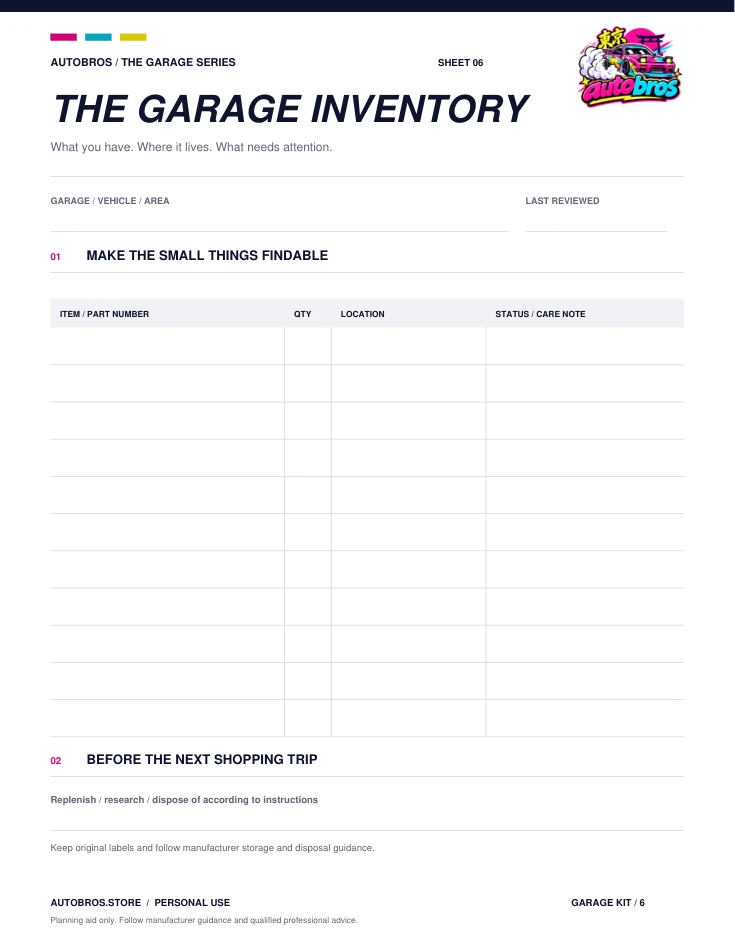
Garage inventory
What you have, where it lives, and what needs replenishing.
Fill in the free worksheet Blank PDFReferences & further reading
Sources reviewed October 13, 2026. Product facts are manufacturer or retailer information, not an Autobros test. Confirm current instructions before acting.
SEMA — 2026 market research on off-road and aftermarket spending