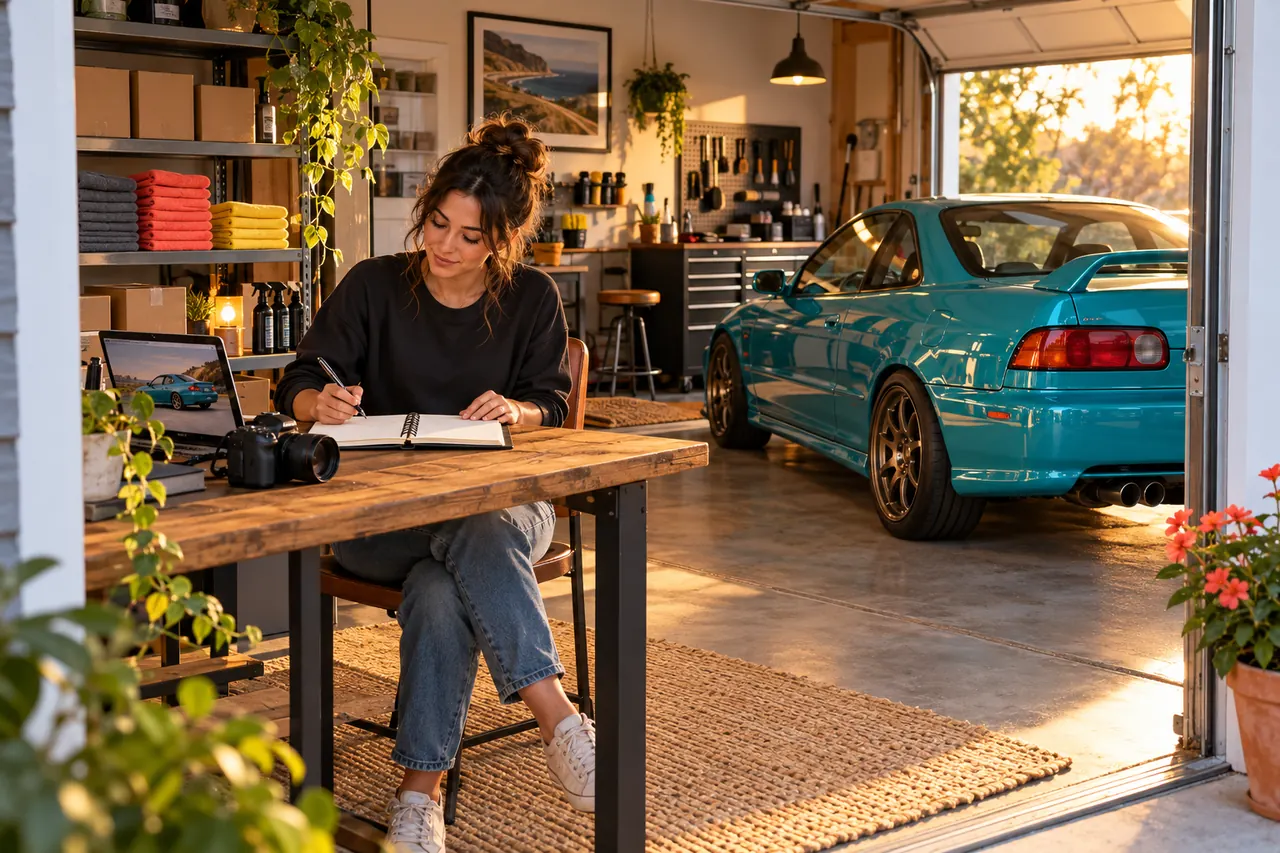
Show the progress, not an invented performance claim.
Choose a place you can use
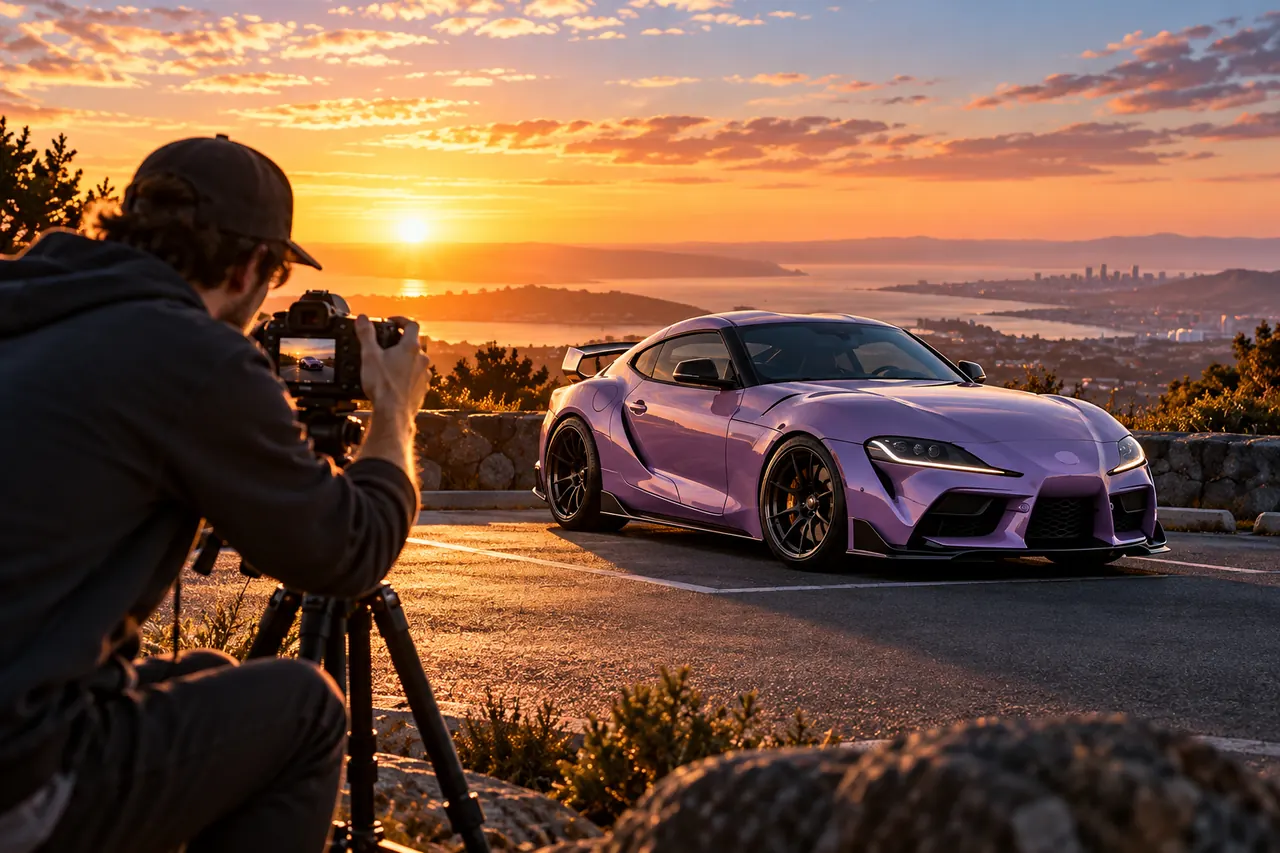
Find a location where parking and photography are permitted and where you can work without obstructing traffic or pedestrians. Do not stop in an active roadway for a dramatic shot. This guide is about stationary documentation, not filming driving maneuvers.
Make a small shot list
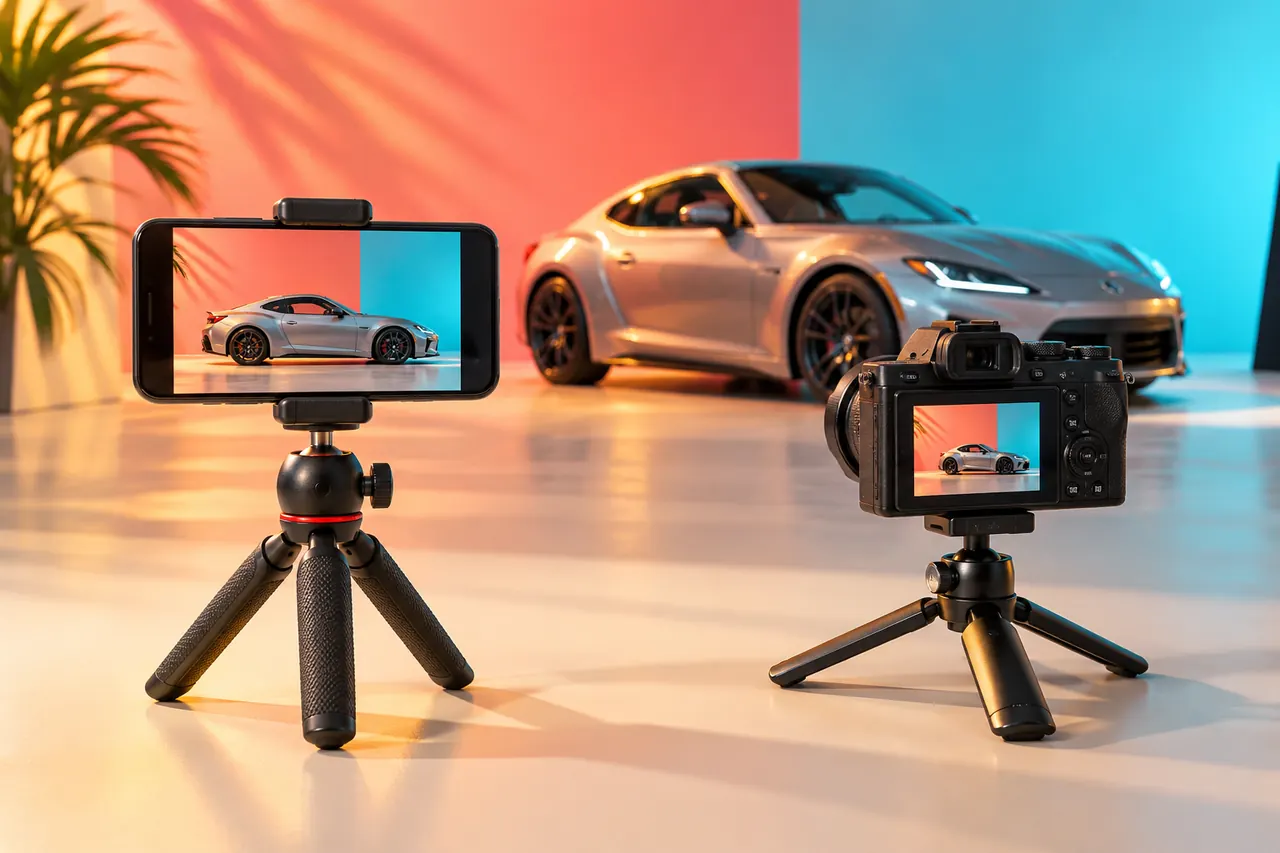
Capture the whole car from a few consistent angles, then record the details relevant to the current stage. Photograph the same areas before and after a change. A repeatable position helps you compare decisions instead of confusing a different camera angle with a better result.
Look for useful light
Walk around the parked car and observe reflections before pressing the shutter. Choose the background deliberately and simplify whatever competes with the subject. You do not need to buy a new camera to notice an awkward reflection or a distracting object. Use what you own to develop a consistent record first.
Protect private information
Check photographs for addresses, personal documents, keys, location clues, and other details you do not intend to publish. Ask permission before prominently featuring another person or their car. A community submission should include clear rights and consent, not just an upload button.
Tell the true story
Label concept images and rendered cars as concepts. Do not present them as customer builds, installation proof, or tested results. Add a caption explaining the goal, current stage, and what remains to be done. A modest build with accurate notes can be more useful to another enthusiast than an impressive image without context.
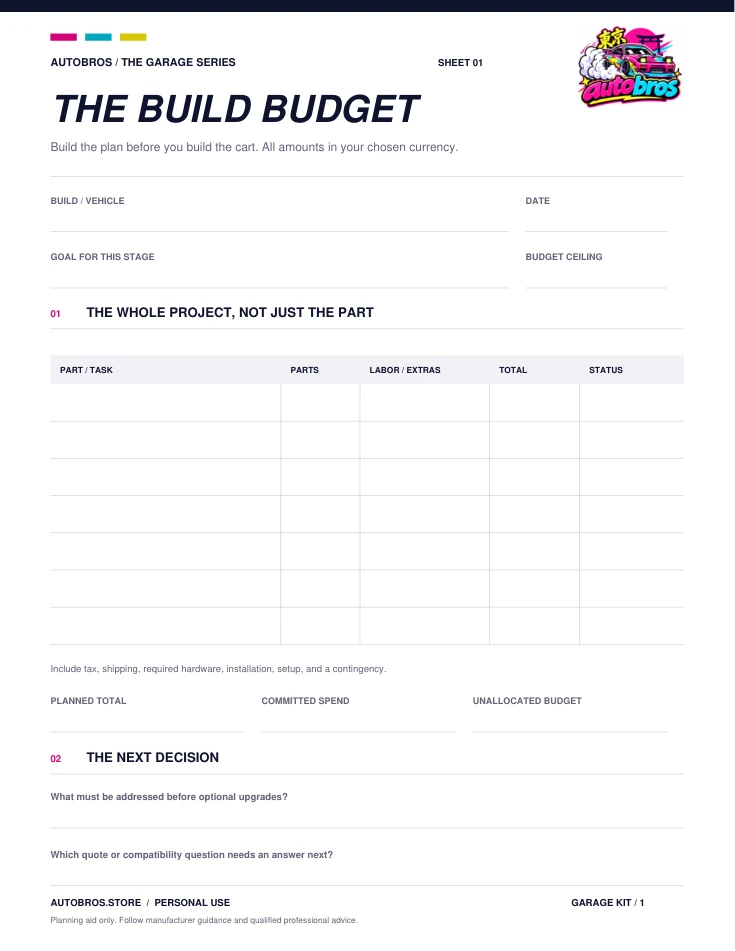
The build budget
Parts, labor, quotes, actual spend, and a little breathing room.
Fill in the free worksheet Blank PDF