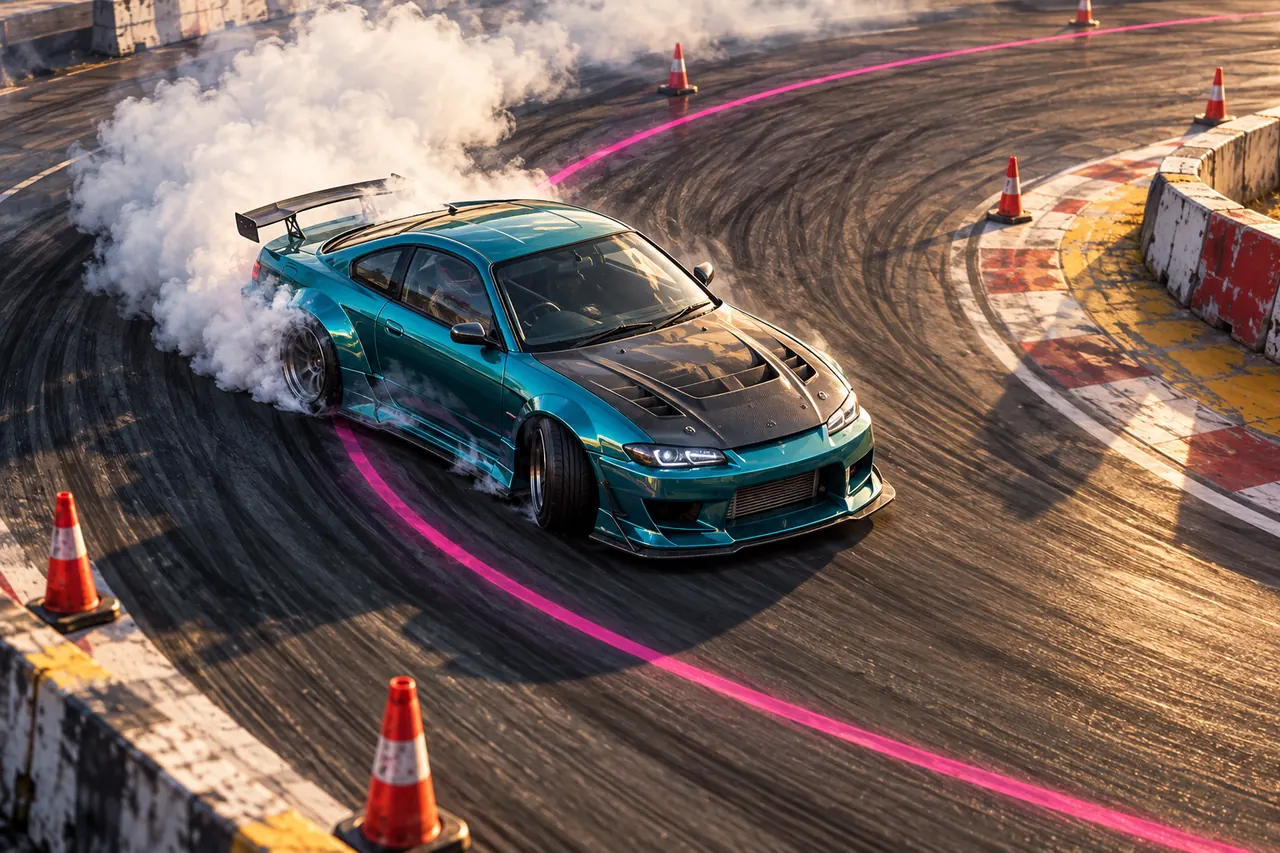
Drifting gets more interesting when you can describe what you are seeing. A spectacular cloud of smoke is a moment; a clear line through the course is something you can follow. Formula DRIFT changed its PRO qualifying format for 2026, making this a useful season to learn how the broadcast pieces fit together.
Separate qualifying from tandem competition. Use the broadcast, course explanation, and current rulebook together instead of judging a run from one dramatic camera angle.
The confirmed 2026 format change
In its February 23 announcement, Formula DRIFT said PRO would return to two-run qualifying with Race Data Labs' Universal Drift Scoring Method, or UDSM. The system scores line and angle, approximately 80% of the qualifying total; the judging panel assesses style, the remaining 20%. PROSPEC retained seeding-bracket qualifying.
The same announcement describes telemetry as a reference for judges during competition, including vehicle position, proximity, comparative angle, and deceleration. That does not mean a computer automatically decides every tandem battle. Treat an explanation of PRO qualifying as an explanation of that format, not a blanket description of all drifting.
Give yourself a viewing vocabulary
Use three plain-language questions while watching. Line: where is the car going relative to the course the commentators describe? Angle: how is the car oriented relative to its path? Style: how does the run look as a connected piece of driving? These are viewing prompts, not an alternative scoring formula.
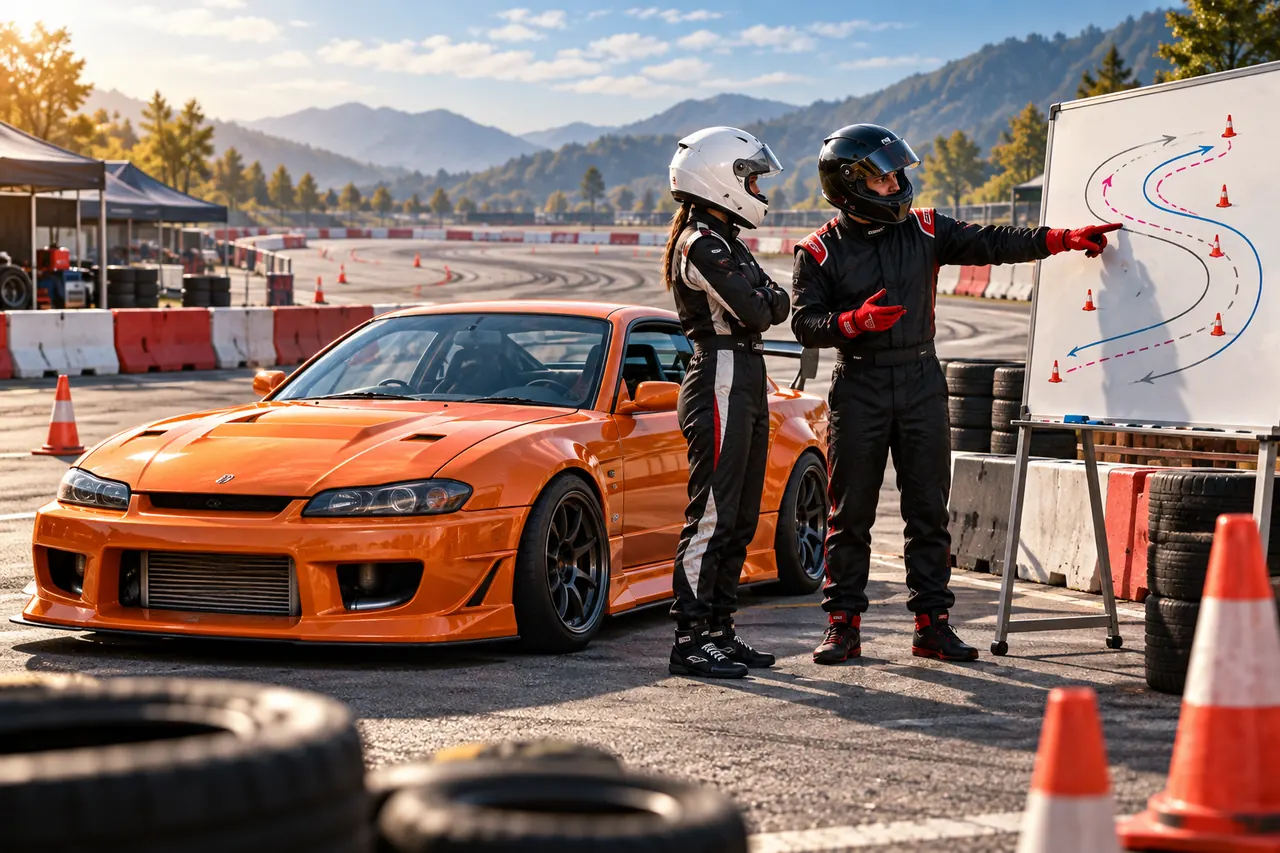
Pause a replay after the course briefing and sketch a few reference points on paper. You do not need an engineering diagram. You need enough context to notice that a dramatic-looking moment and a well-executed prescribed run are not always the same thing. Keep your first observations descriptive rather than turning each one into an assumed penalty.
Watch a whole run before deciding
Pick one car and follow it from entry to finish. On the first viewing, concentrate on its overall path. On a second viewing, look at how the run connects from one section to the next. Then listen to the explanation and compare it with your notes.
This approach is especially helpful when smoke or a camera cut hides part of the action. Instead of saying the result makes no sense, identify the piece you could not see. A different replay, a course diagram, or the officials' explanation may answer that specific question. Sometimes the available footage simply is not enough to make your own confident call.
Read data as evidence with context
A number on screen is most useful when you know what it measures and which part of the run it describes. Ask whether you are looking at an individual measurement, a summary, or an official score. Avoid assuming that a single larger number means a better overall performance.
For your own watch notes, keep three columns: visible observation, broadcast explanation, and unresolved question. This helps separate what happened on screen from what you inferred. It also makes watching with friends more enjoyable: you can compare observations without pretending that everyone has the same camera view or the same information available to the judges.
Use the current rulebook for the details
Formula DRIFT maintains a live rulebook page with separate judging, sporting, and technical documents. Follow that page for the current version instead of saving an old screenshot as a permanent reference. This article is an introduction checked on October 13, 2026, not a replacement for those documents.
For the next broadcast, set a modest goal: learn the course explanation, follow one complete run, and understand one decision better than you did before. You do not need to memorize the regulations to enjoy the sport. A little more context can make the precision behind the spectacle easier to appreciate.
A couple of good questions
Is 2026 Formula DRIFT judged entirely by software?
No. The announced PRO qualifying approach combines automated line and angle scoring with human style judging. Telemetry also supports judges during competition.
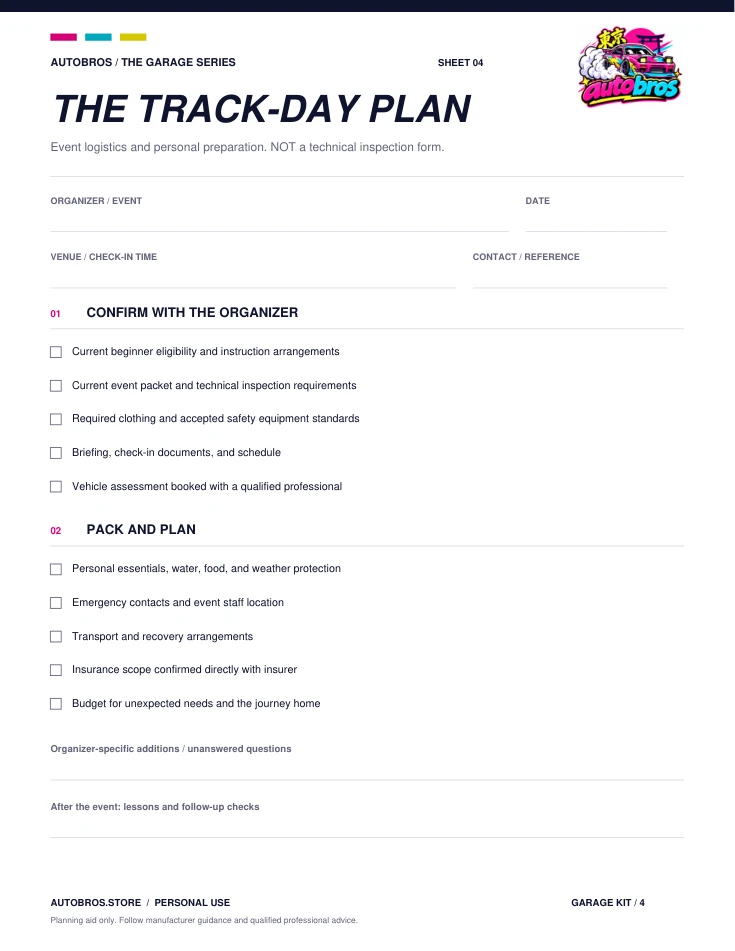
Track-day prep
Event logistics and personal packing. Not a technical inspection.
Fill in the free worksheet Blank PDFReferences & further reading
Sources reviewed October 13, 2026. Product facts are manufacturer or retailer information, not an Autobros test. Confirm current instructions before acting.
Formula DRIFT — 2026 competition format announcement (February 23, 2026) Formula DRIFT — current sporting, judging and technical rulebooks