“12V” describes a power system, not a promise that every inflator plugs into your accessory socket.
Start with the vehicle and the task
Write down the tire sizes you need to service, how often you expect to use the inflator and where it will live. An occasional top-up at home is a different purchase from repeated use across several vehicles. Use the vehicle placard or owner’s manual for the target tire pressure, rather than the maximum number on the tire sidewall. NHTSA recommends checking pressure when tires are cold.
An inflator does not diagnose a leak or make a damaged tire suitable to drive on. If a tire keeps losing pressure, investigate the cause with a qualified tire professional.
Separate three different power arrangements
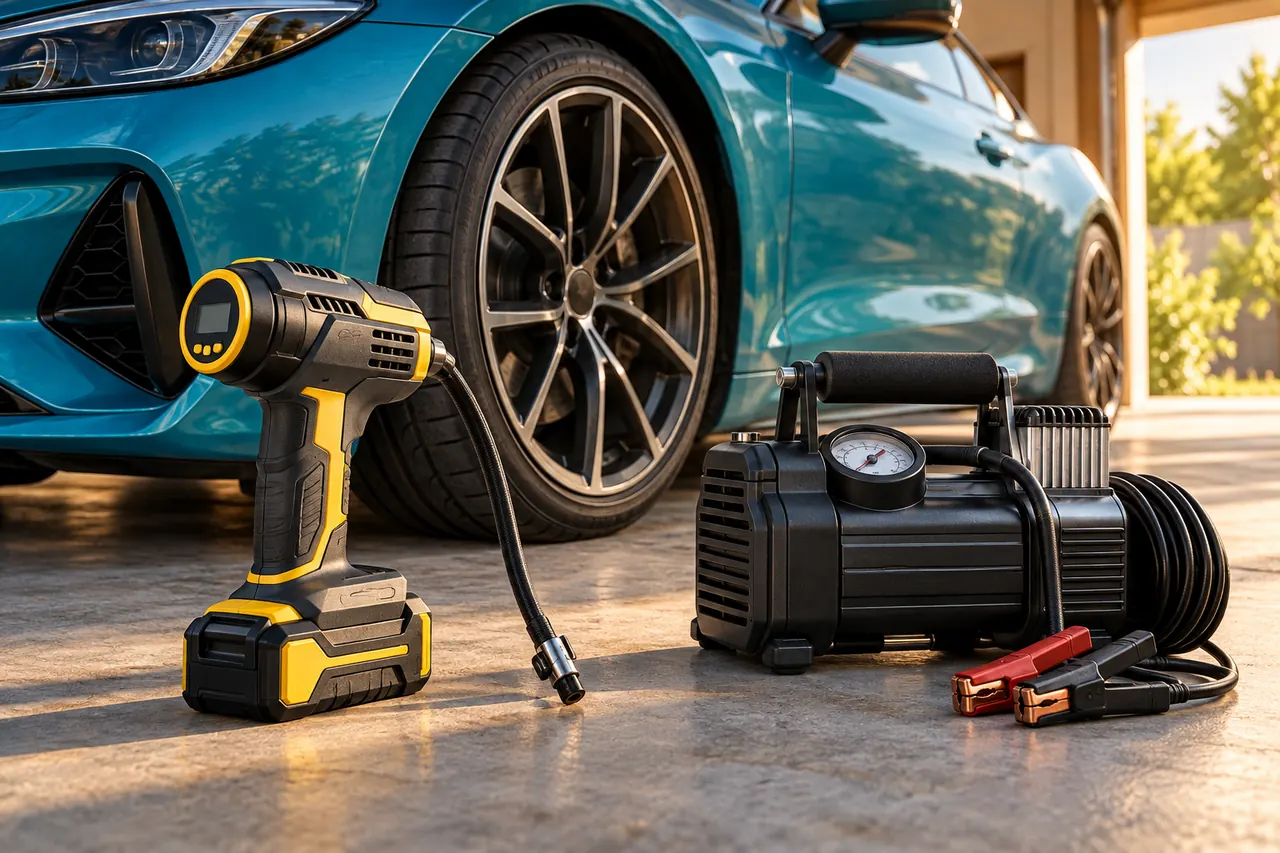
Cordless units rely on a charged internal or compatible tool battery. Some vehicle-powered units plug into an accessory socket, whose electrical rating still needs to match the product. Others use direct battery clamps. The VIAIR 88P, part 00088, uses clamps; it is not an accessory-socket inflator.
Read the exact manual against your vehicle before choosing that arrangement. Do not assume a connection described for one car suits every EV, hybrid or battery location.
Count the accessories you do not already own
DEWALT’s DCC020IB is sold as a bare tool. Its battery, charger and AC adapter are separate; the 12V DC cord is included. It may make sense for someone who already owns the correct DEWALT battery system, while a new buyer needs to consider the complete purchase.
Ask which power source you will actually use and where the tool will be kept charged. A cordless option that is always flat when needed has not solved your problem. Conversely, a vehicle-powered unit needs the appropriate access and usable reach.
Read the small practical details
Compare hose and cord reach, operating limits, storage size and how pressure is checked. Maximum PSI alone says little about the daily experience. Read the manufacturer’s duty-cycle and cooling instructions before planning repeated use.
The analog VIAIR 88P requires switching the compressor off to verify tire pressure in its gauge instructions; it is not a digital preset auto-stop model. The manual also sets operating conditions that matter to safe use. Read it before deciding that the product suits where you intend to work.
Choose the easier routine to maintain
Keep a suitable pressure gauge and your vehicle’s target information available. Make a cold-pressure check part of the ownership routine, and keep the inflator instructions with the tool. Our two evaluations compare different power choices, not a claimed speed-test winner.
In My Garage, record your expected total cost and the reason one power arrangement suits you. If buying for someone else, confirm their tire sizes, power preference and existing equipment first.
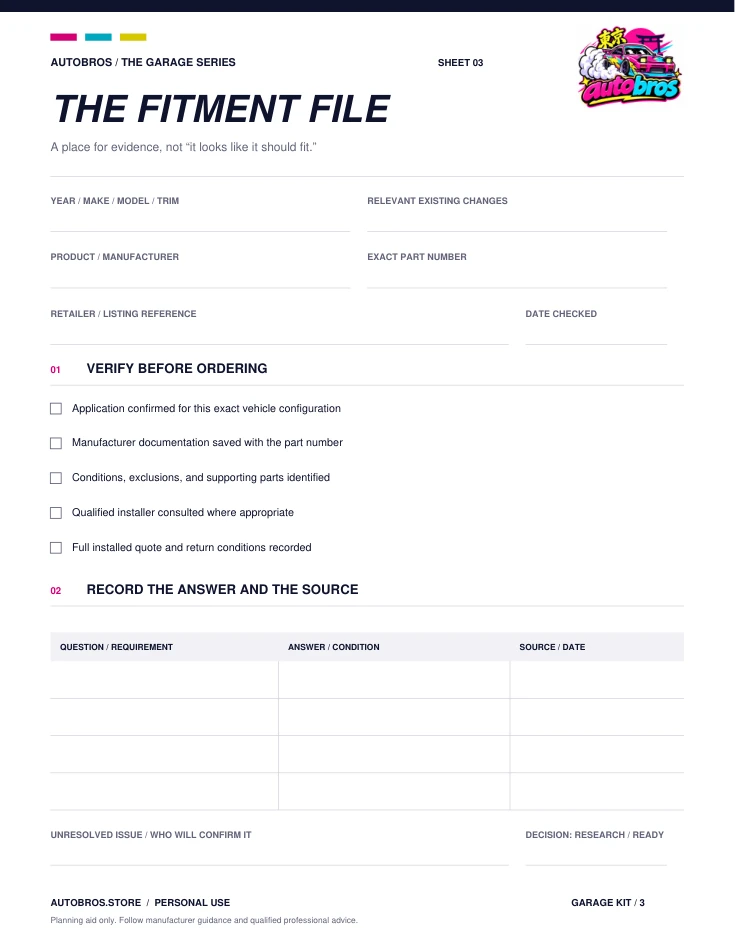
Fitment research sheet
One place for part numbers, compatibility questions, and sources.
Fill in the free worksheet Blank PDFReferences & further reading
Sources reviewed October 13, 2026. Product facts are manufacturer or retailer information, not an Autobros test. Confirm current instructions before acting.
NHTSA — tire care and pressure VIAIR — 88P / 00088 — analog gauge official information DEWALT — DCC020IB official information Manufacturer documentation — 88P / 00088 — analog gauge