“Something for the battery” sounds like a simple gift request until you discover that the products in the search results have different jobs. A charger or maintainer and a portable jump starter are not interchangeable purchases.
This is a buyer’s decision guide, not a connection procedure or a diagnosis of a no-start condition. Follow the vehicle, battery, and device instructions. If the battery is damaged, the application is uncertain, or there are signs of an electrical problem, stop and get qualified help rather than trying modes until something happens.
A maintainer and a jump starter solve different problems. Confirm the application before choosing either.
Start by describing the situation
Write down the actual need before comparing product names. Is the goal to maintain a compatible battery during periods of non-use where suitable electrical power is available? Or is the goal to carry a suitable portable device for an unexpected starting problem? Those questions lead to different product categories.
Next, identify what you know about the vehicle and its battery from reliable documentation. Do not infer battery chemistry from the shape of the case or assume a previous owner left the original type installed. Ask a qualified person to resolve uncertainty before buying or connecting equipment.
An unexplained recurring no-start deserves assessment. A new accessory should not become a substitute for understanding why the issue keeps happening.
What a charger/maintainer example tells you
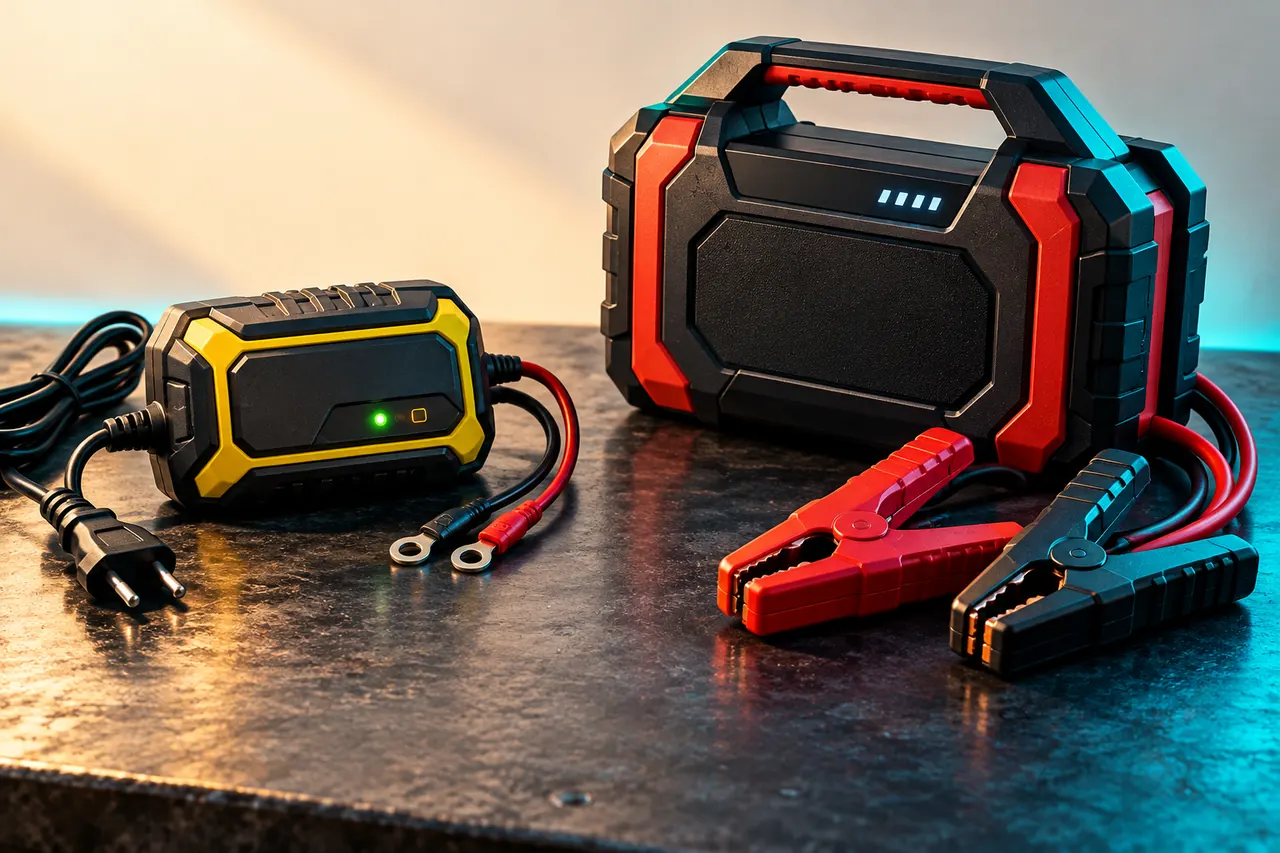
NOCO lists the GENIUS5 as a 5-amp charger with 6- and 12-volt charging options, powered from AC mains. Its documented battery modes and limits—not the broad word “smart”—must be matched to the actual battery and vehicle requirements.
The practical shopping distinction is that this belongs in a plan for charging or maintaining an appropriate battery with a suitable power source. It is not a handheld emergency jump starter. Confirm the exact mode, permitted chemistry, capacity, connection method, and operating conditions in the current instructions before use.
Consider where the equipment will be used and how its cables and power connection can comply with the instructions. Do not buy it on the assumption that any convenient outlet, battery, or improvised connection will be appropriate.
What a portable jump-starter example tells you
NOCO’s GB40 specifications identify 12-volt lead-acid batteries as its vehicle-battery application. Its internal lithium-ion battery does not mean it is intended to jump-start every lithium vehicle battery. These are two different pieces of information on the specification sheet.
NOCO also publishes engine-size limits. Treat those as manufacturer application information to verify for the exact situation, not a guarantee of starting performance under every condition. The device is not the same as a mains-powered maintainer.
Ask what ownership requires: the current charging instructions, storage conditions, inspection, readiness checks, and the vehicle-specific approved connection procedure. An emergency device is a poor purchase if the owner cannot understand or maintain it as instructed.
Make compatibility a written answer, not a guess
Create a small research record with the exact vehicle, documented battery details, device model, intended task, and source of the compatibility answer. Save the relevant manual rather than a cropped marketing headline. If any of those fields is unknown, pause the recommendation.
For hybrids, electric vehicles, modified electrical systems, or an aftermarket battery conversion, seek the exact manufacturer guidance and qualified advice. Do not translate a product’s broad “12V” label into permission to use it anywhere on the vehicle.
Similarly, do not use an override, repair, or special mode to work around uncertainty. This article does not explain those procedures. A function existing on the device is not evidence that it is appropriate for the problem in front of you.
Choose one product only when one job is clear
For an owner preparing a compatible weekend car for periods of non-use, a correctly matched maintainer may be the relevant research category. For an owner specifically planning emergency preparedness, a correctly matched jump starter may be the relevant category. Owning both is not a requirement created by this guide.
Compare the current documentation and the exact retailer variant before comparing price. Similar model numbers can refer to different output, capacity, connectors, or revisions. Keep the final SKU and seller details with your purchase record.
For a gift, ask the owner first. A useful conversation about their battery and intended use is more thoughtful than a surprise electrical device chosen because it has a large number on the box. When the application cannot be confirmed, choose a nontechnical gift instead.
Keep the ownership routine with the equipment
After a qualified compatibility check and purchase, keep the instructions accessible. Record the device model, purchase date, and any manufacturer-specified care or readiness actions in your maintenance notes. Follow the current instructions rather than inventing a charging interval or storage-temperature rule from memory.
If the car repeatedly needs assistance, make assessment the next task. Record the circumstances and observations to help the professional, but do not turn those notes into a self-diagnosis. Repeatedly buying a larger device is not a troubleshooting method.
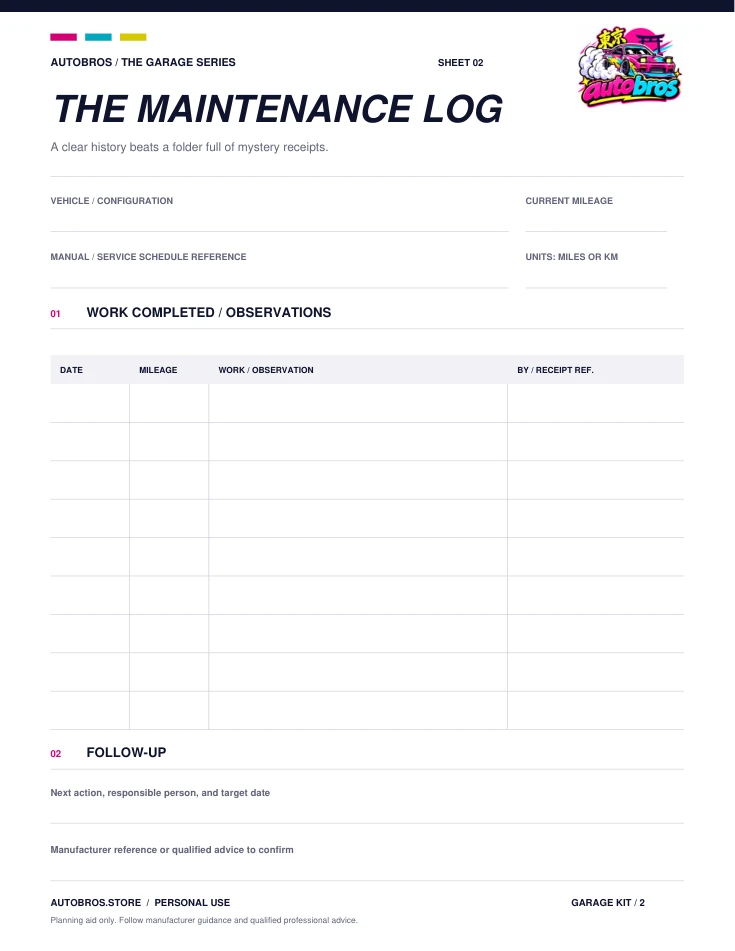
The free Maintenance Log is a place to keep that history together. It does not diagnose the battery, authorize a connection, or make either of these products suitable for your car. A good purchase starts with a documented match between the problem, the application, and the device.
A couple of good questions
Is the GENIUS5 a portable jump starter?
No. The referenced product is an AC-powered battery charger/maintainer. It is a different device category from the GB40.
Does a jump starter’s lithium internal battery establish compatibility with a lithium vehicle battery?
No. Read the documented vehicle-battery application. The referenced GB40 specification lists 12-volt lead-acid batteries.
Maintenance log
Dates, mileage, work completed, and what needs attention next.
Fill in the free worksheet Blank PDFReferences & further reading
Sources reviewed September 29, 2026. Product facts are manufacturer or retailer information, not an Autobros test. Confirm current instructions before acting.
NOCO — GENIUS5 technical specifications NOCO — GB40 technical specifications