
A wrap is not an excuse to forget maintenance. Sun, road grime, bird droppings and careless washing all affect the appearance of film. Different manufacturers and finishes have different cleaning rules, so the installation receipt and product bulletin outrank generic social-media advice. This guide covers owner-level care, not repair of damaged film or a substitute for the installer's directions.
Wash gently, respect the exact film's care guide, and deal with damaged edges before water and wind make them worse.
Step 1 — Identify the film you actually have
Find the brand, film series, finish, installation date and any ceramic coating applied over it. Ask the installer for the matching written instructions if you did not receive them. Matte, satin, textured and gloss films may react differently to products that make ordinary clearcoat look shiny. Before using any detergent, quick detailer or sealant, confirm that it is approved for the exact surface. If you bought the car already wrapped, arrange an inspection and do not assume a previous owner's claimed brand is correct.
Step 2 — Respect the post-install cure period
Fresh wraps need an initial period before washing, and that period is product-specific. Some 3M film care instructions say to avoid washing for at least 72 hours; other graphic systems specify a longer wait. Follow the written aftercare sheet for your film and the installer's guidance. Check edges, seams and complex contours before the first wash. If a section is visibly lifting, do not try to hold it down with a pressure-washer blast or household adhesive.
Step 3 — Set up a gentle, shaded wash
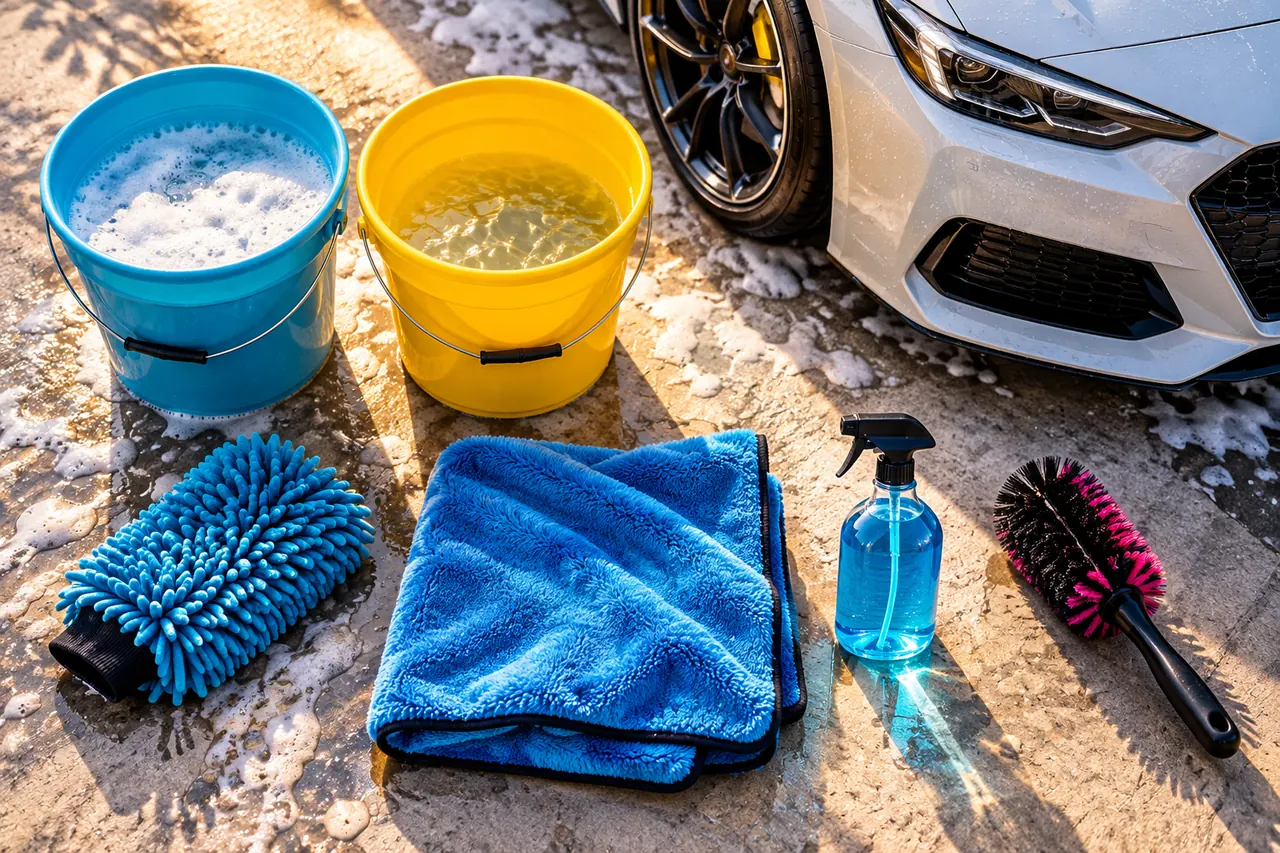
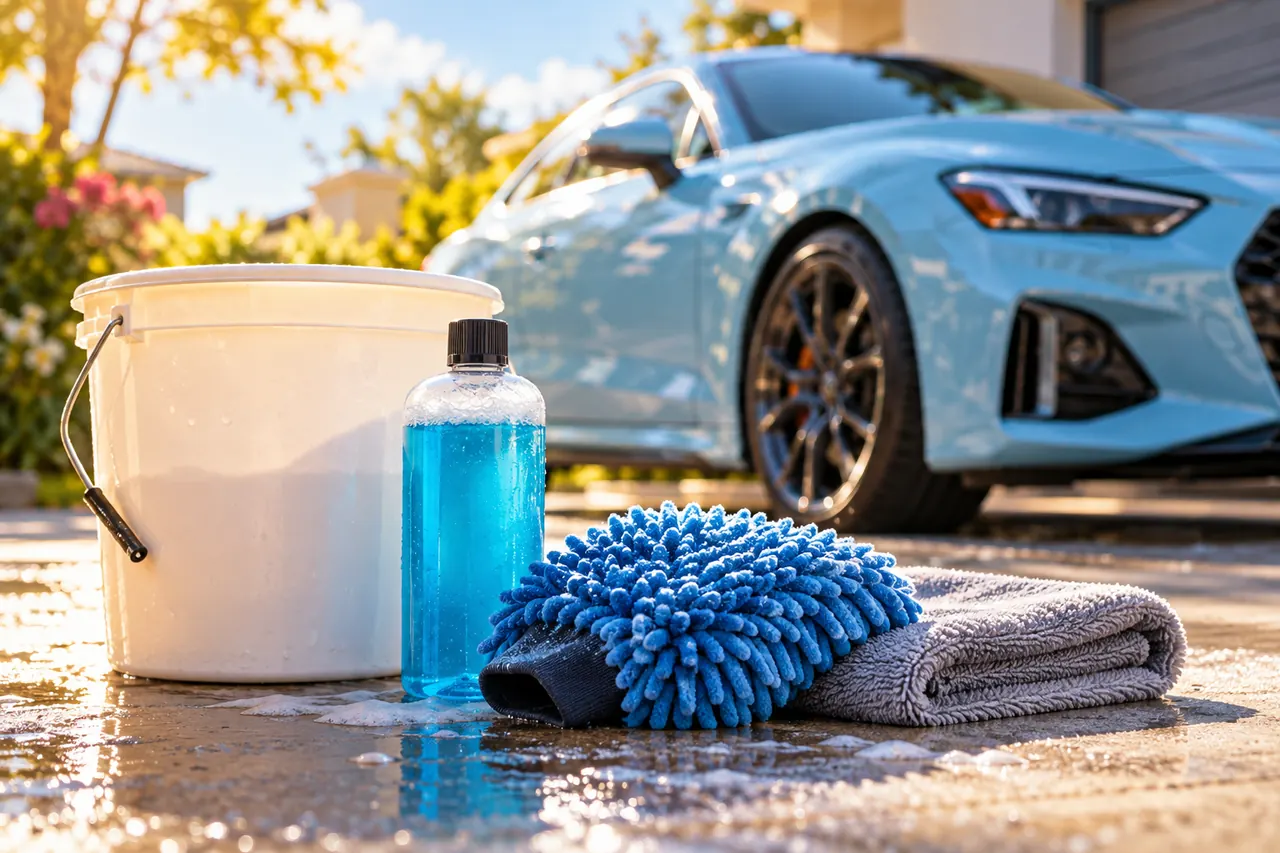
Park out of direct sunlight and let hot panels cool. Rinse loose grit without directing a concentrated jet at seams or edges. Use clean, soft wash media and a mild, film-compatible shampoo. Work from cleaner upper panels toward dirtier lower areas, washing the mitt frequently so grit does not become sandpaper. Avoid stiff brushes, abrasive pads and solvent-heavy products unless the film maker explicitly approves a specific spot-treatment method.
Step 4 — Rinse, dry and inspect
Rinse away detergent and dry with clean microfiber to reduce spotting. Look along bumper corners, mirror caps, edges and recesses for new lifting or trapped residue. Do not machine-polish matte film or apply conventional shine-enhancing wax without confirming the product's compatibility; an unwanted sheen or stain can be hard to undo. Maintain separate towels for wheels and body panels so brake dust does not scratch the wrap.
Step 5 — Handle bugs, sap and bird droppings early
Contaminants are easier to remove before they bake into the finish. Start by softening the area with the film maker's recommended mild cleaning method and rinse gently. Resist the instinct to scrub or scrape. If the residue persists, refer to the specific manufacturer treatment instructions and test only approved cleaners. Keep fuel splashes and harsh chemicals away from the film whenever possible, and clean them promptly using the correct care process.
Step 6 — Avoid the common car-wash traps
A brush-style automatic wash can scratch film, dull a finish or catch loose edges. Handwashing is usually safest; if an automated wash is unavoidable, 3M generally favors touchless or brushless options. Pressure washing can also force water under graphics, especially at an edge. Do not copy an online pressure setting from a different film series. Read the manufacturer limits and ask your installer before using a pressure washer.
Step 7 — Make an aftercare plan for hot climates
Where a car lives outside in strong sun, wash contaminants promptly and use covered parking or shade when possible. Document the installation date, panel condition and any warranty period. Ask a professional about lifting edges, damaged graphics or removal, particularly on repainted panels. Avoid assuming every film will remove without paint damage; the condition and cure of the paint matter.
A couple of good questions
Can I use a brush car wash on a vinyl wrap?
It is best avoided because brushes can scratch film and lift edges. Follow the film manufacturer's specific wash guidance.
Can I wax matte vinyl?
Do not apply generic gloss-enhancing wax unless the specific film manufacturer expressly approves it; matte and textured finishes need compatible care.
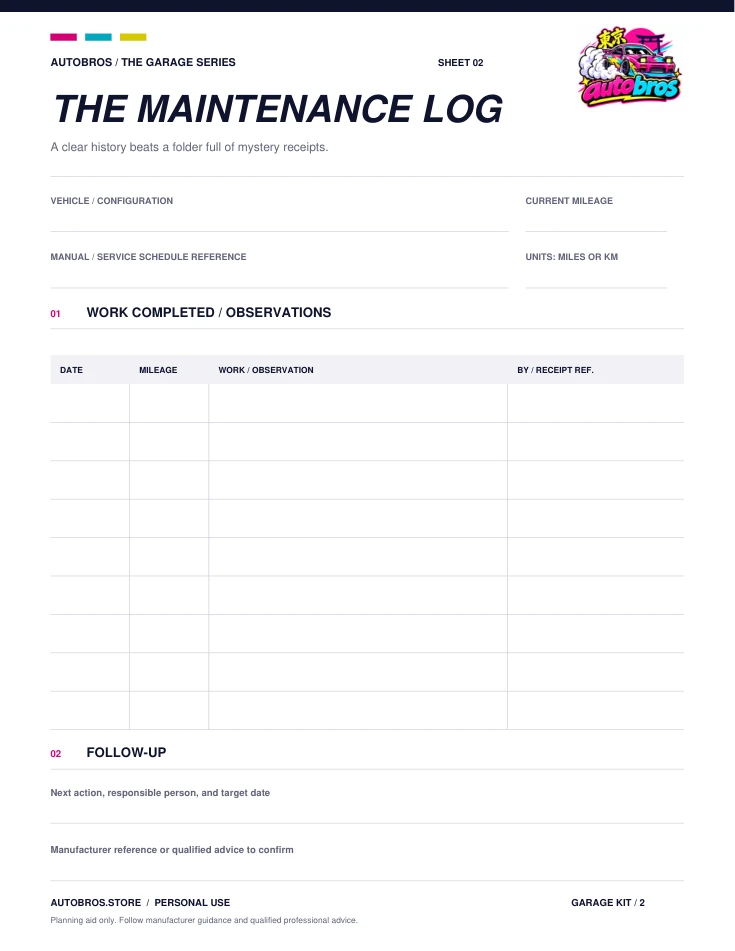
Maintenance log
Dates, mileage, work completed, and what needs attention next.
Fill in the free worksheet Blank PDFReferences & further reading
Sources reviewed October 24, 2026. Product facts are manufacturer or retailer information, not an Autobros test. Confirm current instructions before acting.
3M — Film product care guide 3M — Vehicle wrap questions and maintenance